Placeholder Site third‑party.com Reused in Malicious PowerShell Phishing Scheme
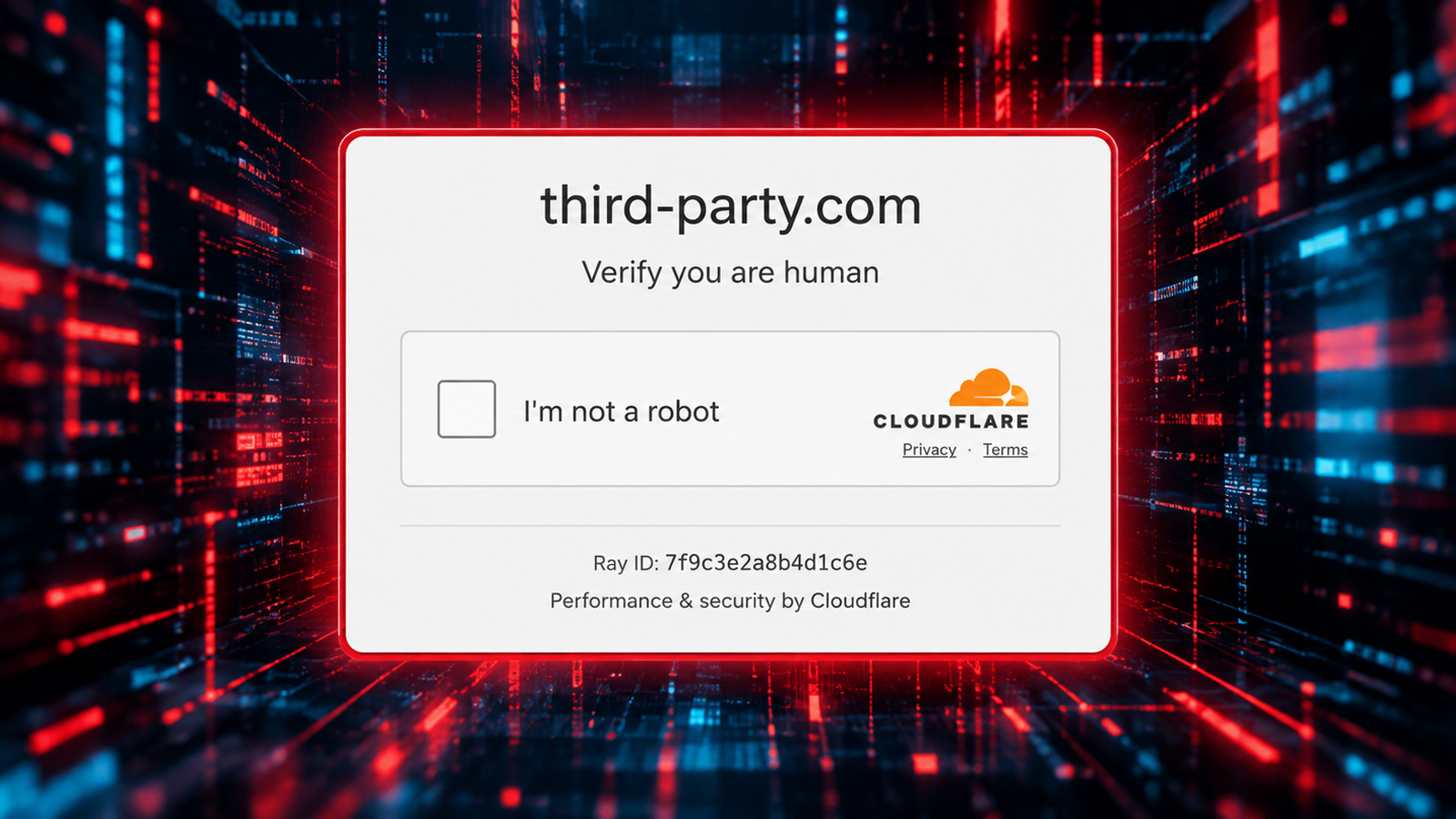
Researchers in security have found that the domain third‑party.com, previously employed as a generic placeholder in code examples and developer documentation, is currently serving a fake Cloudflare verification page aimed at coaxing Windows users to execute harmful PowerShell commands. The finding was initially disclosed by the security site BleepingComputer following several user reports of dubious prompts.
Historically, the domain has shown up in documentation as a neutral sample address—much like example.com—enabling writers to demonstrate URLs without sending visitors to an actual site. Since the name is broadly understood as a dummy, numerous developers and automated systems cite it without fearing misuse. As the address points to an active server, any page that reuses the placeholder may unintentionally funnel traffic to the malicious host.
In this new guise, the website shows a page that copies the well‑known Cloudflare challenge shown by legitimate sites when a visitor is marked as suspicious. The page requests users to prove they are not a robot, but rather than a basic checkbox it provides a button that, once pressed, runs a script purported to verify the browser. It also displays Cloudflare branding—logo and color palette—making the ruse more difficult for non‑technical individuals to detect.
The script leverages the default operation of Windows PowerShell, urging users to copy‑paste a single‑line command into a PowerShell console. That command retrieves and runs further payloads from remote servers, enabling the threat actors to install malware, steal data, or maintain persistent control over the infected computer. The retrieved payloads are usually obfuscated, helping them evade standard antivirus detection. After execution, the code may spawn a reverse shell or deploy a cryptocurrency miner, depending on the attacker’s goals.
Cybersecurity companies caution that this attack chain depends on social engineering instead of a software flaw, exploiting users’ recognition of Cloudflare prompts and their propensity to obey seemingly authentic directions. Users should refrain from running code from unknown origins, confirm the legitimacy of any Cloudflare challenge by inspecting the URL, and maintain a restrictive PowerShell execution policy. Enterprises might disable PowerShell remoting for regular accounts and adopt application‑control tools that block unsigned scripts.
Turning a placeholder domain into a malicious site highlights a wider pattern of threat actors hijacking harmless‑looking internet assets to boost the plausibility of phishing attacks. Defenders are encouraged to watch for traffic to known example domains, revise security policies to flag unforeseen Cloudflare verification pages, and inform developers about the dangers of employing real‑world domains in documentation. Researchers anticipate that comparable methods could surface on other placeholder domains, urging a reassessment of how developers cite example URLs in public repositories.


Comments (0)
Be the first to comment.
Join the discussion