New Research Indicates Martian Gullies Formed Primarily by CO₂ Frost, Not Liquid Water
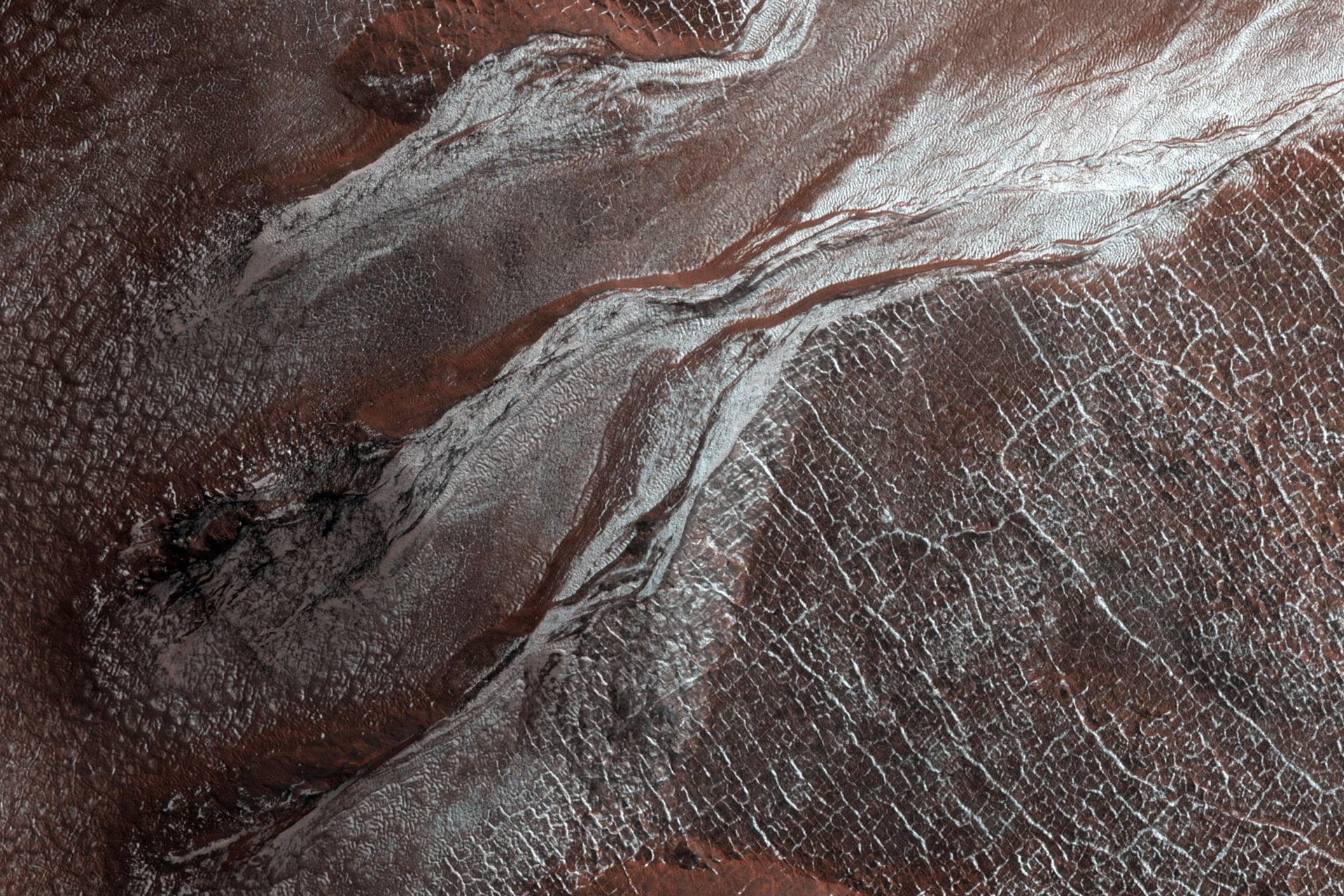
A fresh analysis of high‑resolution images upends the traditional belief that the tiny valleys and channels lining Martian slopes were sculpted by flowing liquid water, instead attributing their creation to seasonal carbon‑dioxide frost.
First identified by orbiting probes in the early 2000s, these gullies generated enthusiasm because their morphology—slender cuts topped by alcove‑like heads and ending in fan‑shaped deposits—resembled water‑carved features on Earth, prompting many to interpret them as signs of recent wet processes.
Researchers revisited the structures with the HiRISE camera on the Mars Reconnaissance Orbiter, which resolves details down to about 30 cm per pixel. By juxtaposing pictures taken over several Martian years, they observed fresh material accumulating during winter, when surface temperatures permit carbon‑dioxide frost to form, and disappearing in spring as the frost sublimates.
This annual cycle matches the dynamics of CO₂ ice rather than any thermal window that could allow liquid water. Experimental studies and climate models back the concept that thin CO₂ frost layers may become unstable, slide downhill, and pull loose regolith, etching channels that look strikingly similar to those once thought water‑formed.
Most of the presently active gullies lie on pole‑facing inclines that receive little sunlight, creating ideal conditions for frost to linger. The authors contend that this distribution supports a frost‑driven origin, while conceding that extinct gullies could have arisen under different, perhaps wetter, circumstances.
Although the findings lower the odds that present‑day liquid water is responsible for these formations, they do not rule out a historically wetter Martian environment. The study underscores how sequential, high‑resolution imaging can illuminate planetary geology and recommends that upcoming missions employing ground‑penetrating radar or on‑site sampling could further investigate whether subsurface ice played a role in the ancient gullies.


Comments (0)
Be the first to comment.
Join the discussion