New Fossil Finding Reshapes History of Live Birth in Precursors to Mammals
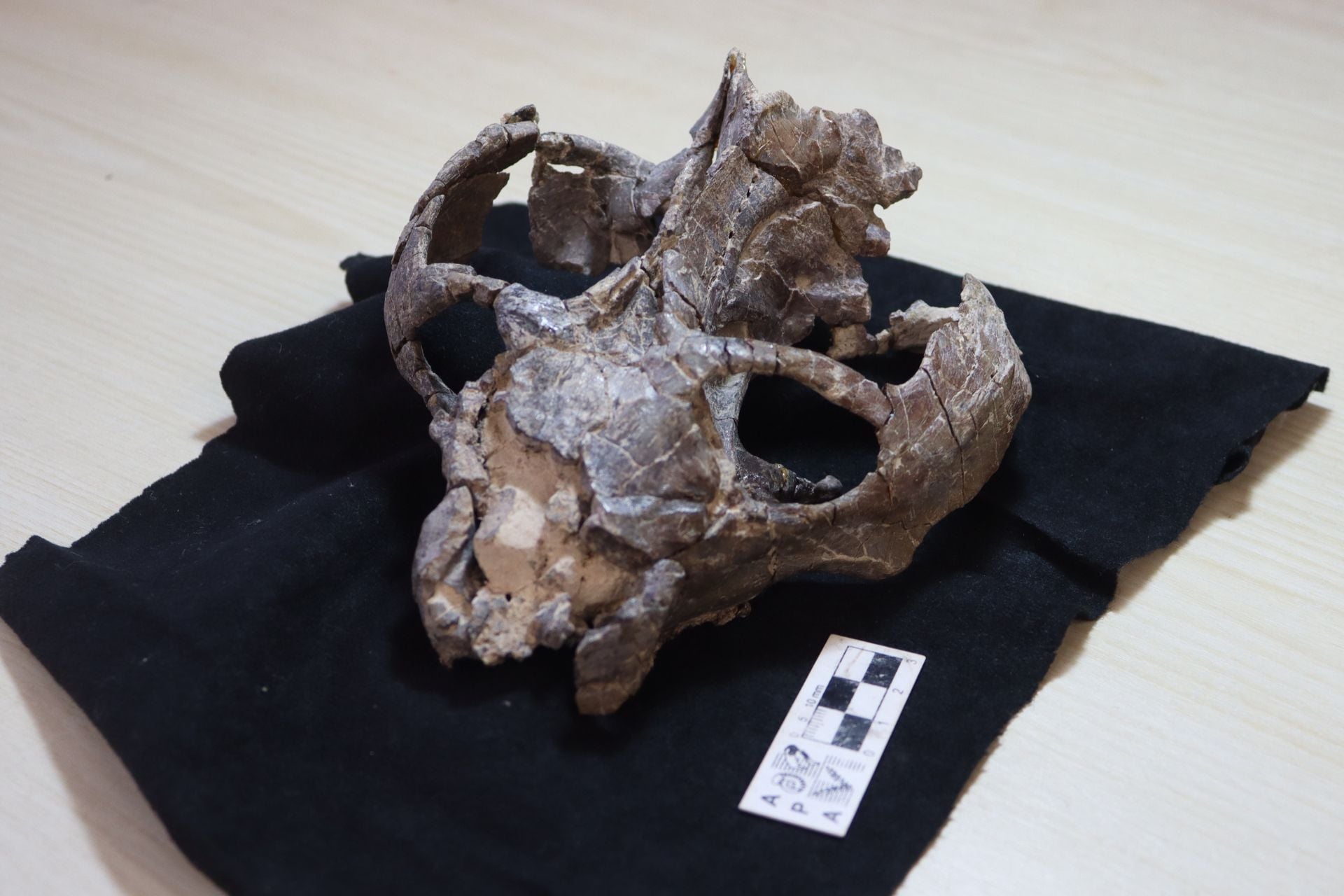
A fresh scientific breakthrough has upended a long-standing theory regarding how cynodonts—the ancient ancestors of modern mammals—reproduced. Scientists have uncovered the inaugural concrete proof that these animals, which inhabited the planet roughly 236 million years ago, gave birth to live young, dismantling the prior consensus that they only laid eggs.
For many years, evolutionary biologists and paleontologists believed that cynodonts, which serve as an evolutionary bridge between reptiles and mammals, were oviparous, meaning they reproduced by laying eggs. This long-held view stemmed from comparative biological studies of other early vertebrates and the existing fossil record. Nevertheless, this latest discovery represents a major turning point, indicating that a fundamental mammalian reproductive mechanism developed far earlier than previously assumed.
The revolutionary proof stems from a 236-million-year-old fossilized specimen that exhibits unmistakable signs of internal gestation. Although researchers are still analyzing the exact nuances of the fossil's preservation, the discovery of young inside the mother's fossilized remains clearly signals viviparity, or live birth, as opposed to egg-laying. This represents a major milestone in paleontology, marking the very first time such direct proof has been documented in cynodonts.
This insight is vital for mapping out the evolutionary path of mammals. Giving birth to live young is a signature trait of the vast majority of today's mammals, providing benefits such as higher survival rates for offspring through internal nurturing and hands-on maternal care. Locating the exact origins of this breeding strategy in our deep evolutionary past allows researchers to better reconstruct the intricate timeline of how mammalian characteristics evolved across millions of years.
Transitioning from laying eggs to delivering live young is considered a monumental evolutionary leap. By proving that cynodonts were already viviparous, this find rewrites the timeline for when this highly evolved reproductive strategy appeared within the synapsid family tree—the lineage containing mammals and their long-extinct relatives. It implies that certain reproductive behaviors typically linked to modern mammals were already active in their ancient predecessors.
The ramifications of this discovery reach far beyond the realm of reproductive biology, potentially reshaping our perspective on early parental care, stages of development, and the specific ecological roles cynodonts played. An animal that gave birth to live offspring likely utilized distinct survival tactics and engaged with its surroundings differently than an egg-laying species that abandoned its nest to hatch.
This landmark fossil find invites a thorough reassessment of previously collected cynodont specimens and drives deeper research into the varied reproductive methods of early mammal-like reptiles. Researchers are expected to re-examine existing museum archives with a new perspective, hunting for further clues that could support or build upon this initial proof of live birth in our deep ancestry, thereby continuing to polish our understanding of the history of life on Earth.



Comments (0)
Be the first to comment.
Join the discussion