Google Maps offers different features on Android Auto versus Apple CarPlay
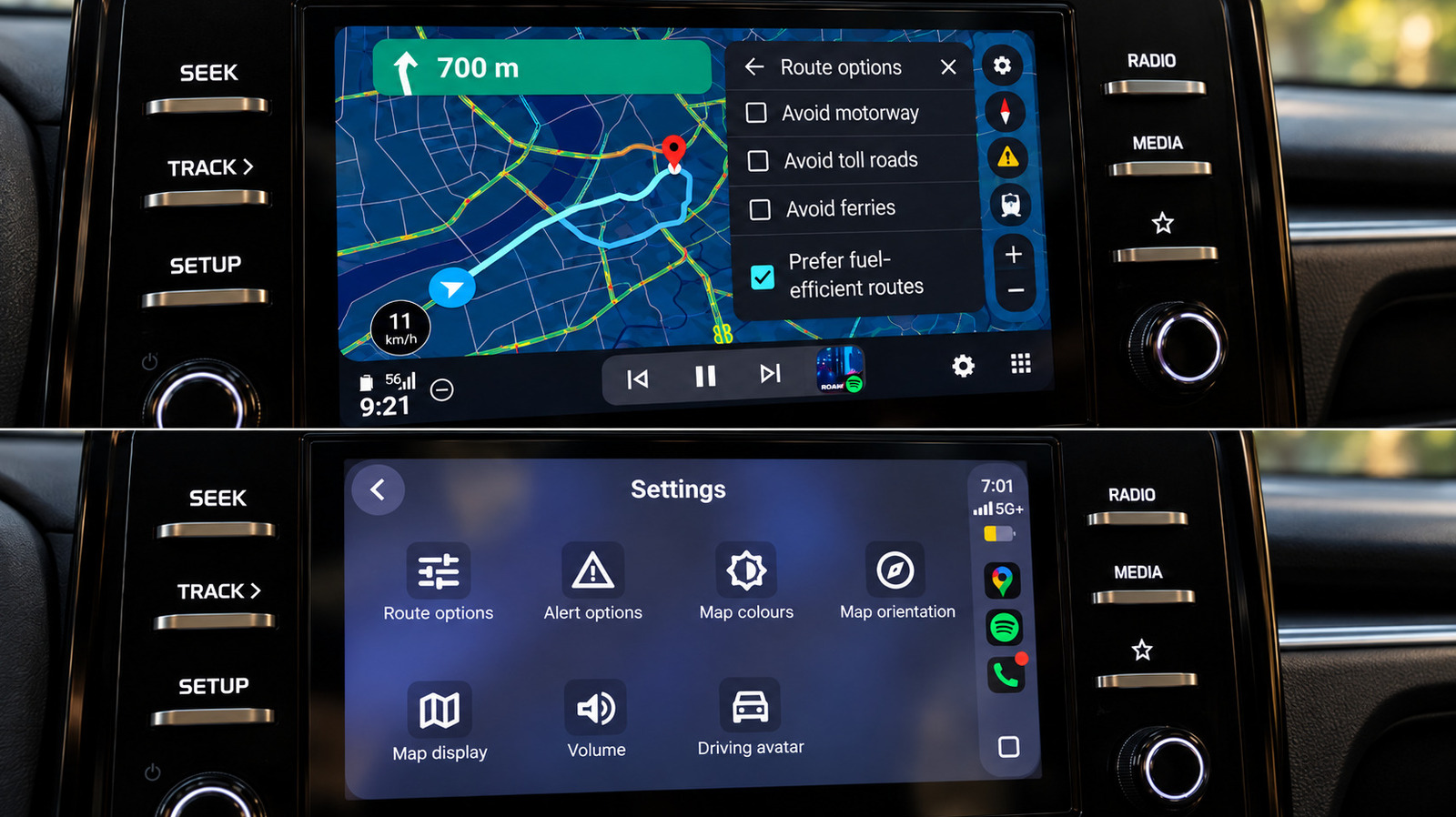
Google Maps, the ever‑present navigation tool, does not deliver an identical suite of functions on the two leading smartphone‑to‑car systems. Both Android Auto and Apple CarPlay allow drivers to see routes, get turn‑by‑turn directions and search nearby points of interest, yet several capabilities operate more fluidly—or exist solely—in the Android Auto setting.
A clear illustration of this gap is the capacity to display several destinations at once. On Android Auto, users can add a second stop and view both legs of the trip on a single screen, while CarPlay confines the view to one endpoint, forcing the driver to input the next waypoint after arriving at the first.
Android Auto also gains an edge with its integration of live traffic overlays. The system presents a broader array of visual indicators—such as colored lane markings and dynamic congestion shading—that refresh more often than the static icons displayed on CarPlay, enabling faster rerouting when traffic shifts.
In addition, Google Maps on Android Auto features a dedicated “Explore” pane that lets motorists browse restaurants, gas stations and attractions without exiting the navigation view. CarPlay’s counterpart is split into a separate app window that can be cumbersome to close while driving. Moreover, Android Auto supports voice‑only searches for nearby locations, so a driver can simply ask for “coffee shops nearby” and receive an audible list, a function that is limited or missing on CarPlay.
Lastly, the platforms diverge on map‑style options. Android Auto users can switch among standard, satellite and terrain maps directly from the on‑screen menu, whereas CarPlay sticks to the default style. These variations matter to users who depend on particular visual data—cyclists who favor terrain views or long‑haul truckers who need satellite imagery for remote stretches. Google has said that achieving feature parity is an objective, but at present Android Auto users enjoy a richer Google Maps experience. Engadget first reported these distinctions, highlighting how platform choice can affect daily commuters and road‑trippers alike.


Comments (0)
Be the first to comment.
Join the discussion