Drone‑launched and ground‑based autonomous robots accelerate Ukraine’s Vivaldi counteroffensive
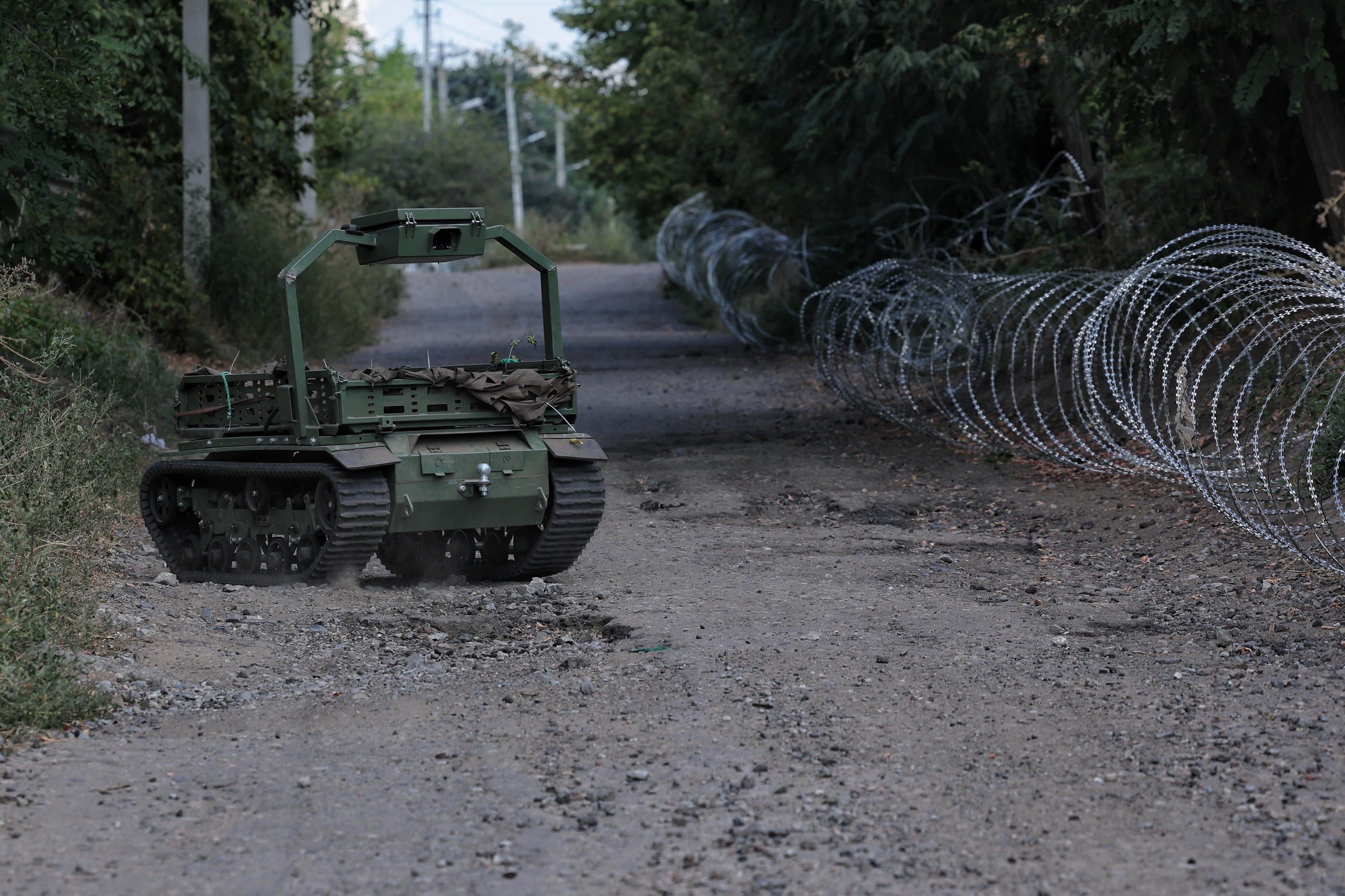
The Ukrainian military has started dropping self‑propelled combat robots from large transport drones, inserting them far inside Russian‑controlled areas as a component of a wider effort to retake seized territory.
These drone‑borne machines are built to perform scouting, attack designated targets and stream live information to commanders, enabling Ukrainian forces to hit foes from surprising directions without exposing themselves to direct fire.
On land, wheeled robotic platforms fitted with de‑mining equipment advance ahead of foot soldiers, methodically disabling explosive threats that have hampered earlier pushes. Their self‑guiding navigation and remotely‑controlled manipulators let operators open safe routes while keeping troops out of comparable danger.
Aerial and ground‑based robots are both incorporated into Operation Vivaldi, the extensive counteroffensive that recently stalled a Russian pincer move in the east. Merging swift unmanned strikes with conventional infantry advances has allowed Ukrainian leaders to preserve momentum and take advantage of openings in enemy positions.
Fielding these devices illustrates an expanding tendency to use commercial drones and off‑the‑shelf robotics in contemporary combat. Experts observe that this method not only cuts losses but also shortens the decision‑making loop, since information gathered by the robots is fed straight into operational planning.
Even with these tactical advantages, obstacles persist. Keeping dependable communications in contested skies, guaranteeing robot performance under severe weather, and meshing them with existing command frameworks demand ongoing adjustments. Ukrainian engineers are said to be developing upgrades that will boost payload limits and enhance autonomous decision‑making.
As the war progresses, the effective employment of combat and de‑mining robots may establish a model for future battles, indicating a move toward more automated frontline assistance in conventional warfare.



Comments (0)
Be the first to comment.
Join the discussion