Webinar Reveals How Rogue OAuth Apps Threaten Google Workspace Security
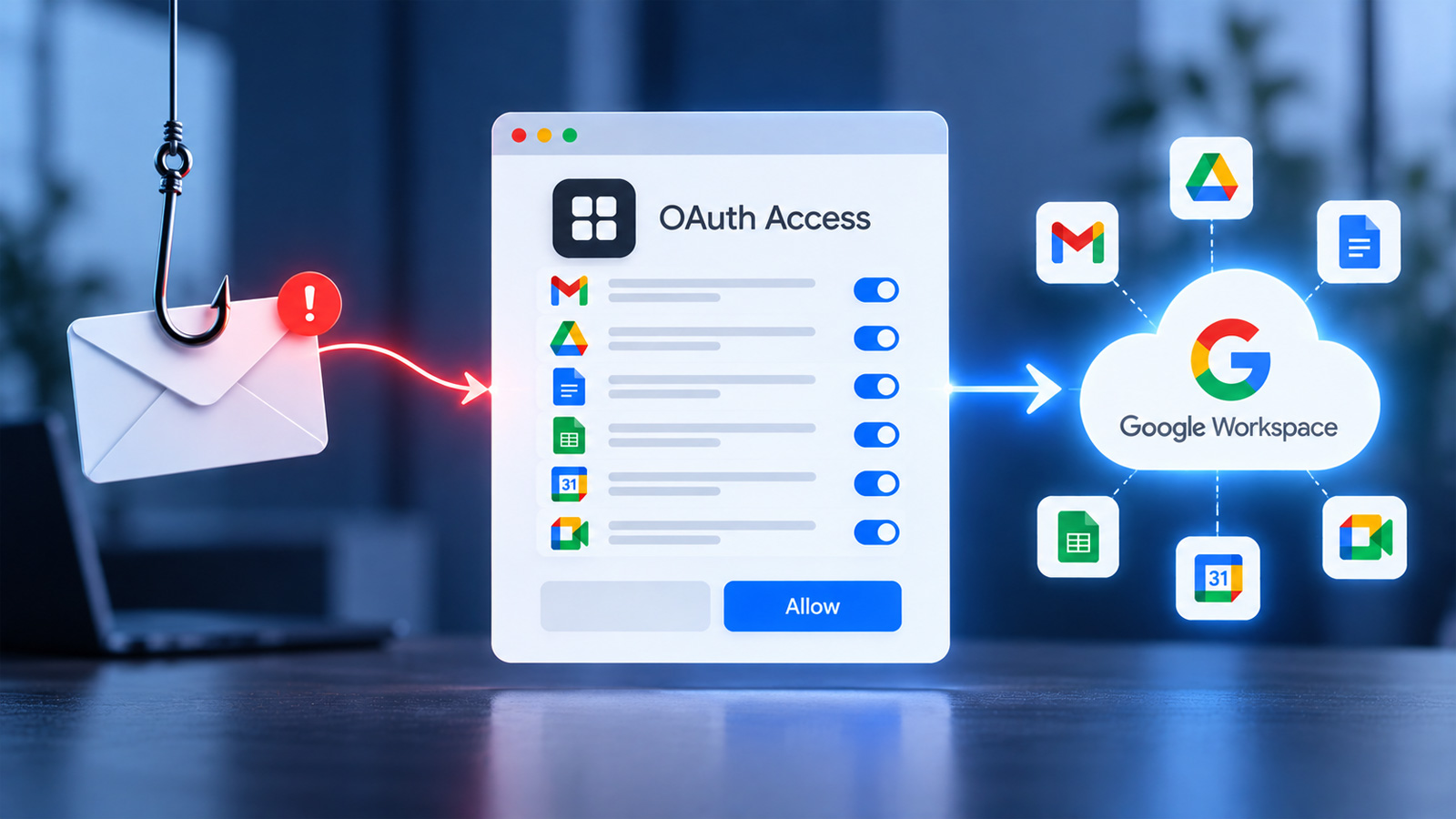
During a recent virtual briefing, presenters warned that malicious OAuth apps are emerging as a significant danger to Google Workspace users, capable of sidestepping conventional password safeguards and giving attackers unrestricted entry to corporate information.
Differing from traditional credential‑theft schemes, this technique depends on social engineering to coax users into approving a rogue third‑party application. After approval, the app receives identical privileges to a legitimate integration, enabling it to read, alter, or extract emails, documents and other assets without setting off ordinary sign‑in warnings.
The speakers illustrated two specific examples. The first involved a phishing message that sent recipients to a fake app asking only for read‑only rights to Gmail and Drive, permissions that many users habitually granted. The second scenario described a more advanced operation that presented a seemingly harmless productivity utility requesting extensive admin scopes, allowing the attacker to list users and siphon confidential files throughout the enterprise.
Together, these examples highlighted a fundamental flaw: while Google Workspace’s defenses typically focus on strong passwords and multi‑factor authentication, OAuth tokens may stay active for weeks after a password change, making token‑based exploitation a powerful avenue for breaches.
To curb the threat, the webinar suggested multiple safeguards. Administrators ought to apply the principle of least privilege by restricting the scopes third‑party apps may request, conduct frequent audits of approved OAuth clients, and set up automated alerts for unusual token activity. Moreover, they recommended running user‑education initiatives that clarify the risks of overly permissive grants as an added layer of protection.
Security researchers further counseled organizations to use Google’s native token revocation utilities and to enforce security‑key requirements for high‑risk accounts, providing an additional verification step prior to token issuance.
With more firms embracing cloud collaboration platforms, the session concluded that monitoring OAuth authorizations will be as vital as maintaining password hygiene to avert future data compromises.



Comments (0)
Be the first to comment.
Join the discussion