Tesla renames Full Self‑Driving to “Assisted Driving” ahead of Europe launch
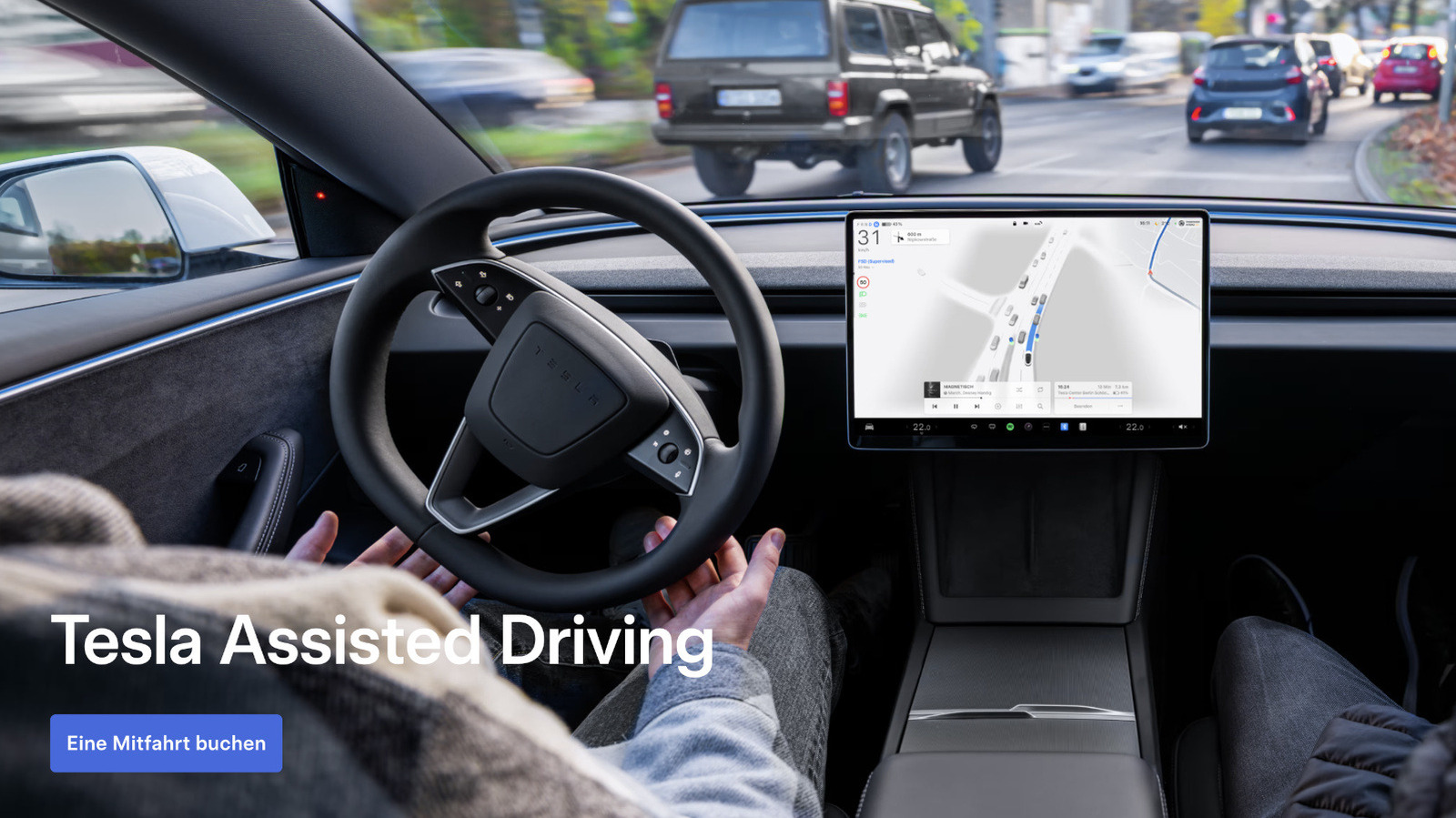
On Tuesday, Tesla revealed that its disputed Full Self‑Driving (FSD) system will be sold in Europe under the title “Assisted Driving,” a move intended to smooth the route to regulatory clearance throughout the region.
This rebranding mirrors the company's attempt to match the European Union’s naming framework for driver‑assistance equipment. EU officials have been cautious about wording that implies complete autonomy, favoring descriptors that unmistakably signal driver supervision. By choosing a more restrained label, Tesla aims to prevent the impression that its system can function without human control.
In the United States, FSD is available both as a subscription and as a one‑off purchase, combining capabilities like highway lane‑changing, traffic‑aware cruise control and modest city navigation. The suite has been released in beta to a limited pool of drivers, igniting discussion about safety and the sufficiency of existing testing procedures. Changing the name leaves the software unchanged, though it could affect the manner in which regulators assess the system.
European buyers may find the new branding helpful in understanding the system’s capabilities. The “Assisted Driving” tag indicates that the driver must stay attentive and prepared to take over, aligning with the EU’s SAE Level 2 and Level 3 standards. Prices and feature bundles are anticipated to remain in line with current options, yet Tesla has not revealed any alterations to subscription structures for the market.
Advanced driver‑assistance technologies have faced hurdles in Europe, where they must pass type‑approval examinations that evaluate hardware, software and safety documentation. Earlier efforts by manufacturers to promote semi‑autonomous features under vague titles attracted regulatory attention, resulting in penalties and compulsory software patches. By proactively selecting a name that aligns with regulatory expectations, Tesla seeks to accelerate the approval process.
Analysts interpret the decision as a component of a wider plan to obtain authorization across several EU countries, each of which can apply its own reading of the regulations. A single naming scheme could ease Tesla’s compliance work and lower the chance of uneven deployments.
Several other car makers have already adopted the EU’s phrasing, branding their offerings as “Advanced Driver Assistance” or comparable terms. This change highlights an increasing agreement that transparent, uniform terminology is vital for both consumer clarity and regulatory supervision.
Going forward, Tesla is expected to file its Assisted Driving suite for certification in the next few months, aiming to roll out the capability on upcoming Model 3 and Model Y deliveries throughout Europe. Gaining approval could establish a reference point for how the firm rolls out higher‑level autonomy functions in regions that require strict safety validation, possibly altering the competitive dynamics for electric cars equipped with driver‑assist systems.


Comments (0)
Be the first to comment.
Join the discussion