Physicists Reevaluate Relativity Following Ultra‑Distant Photon’s Unexpected Behavior
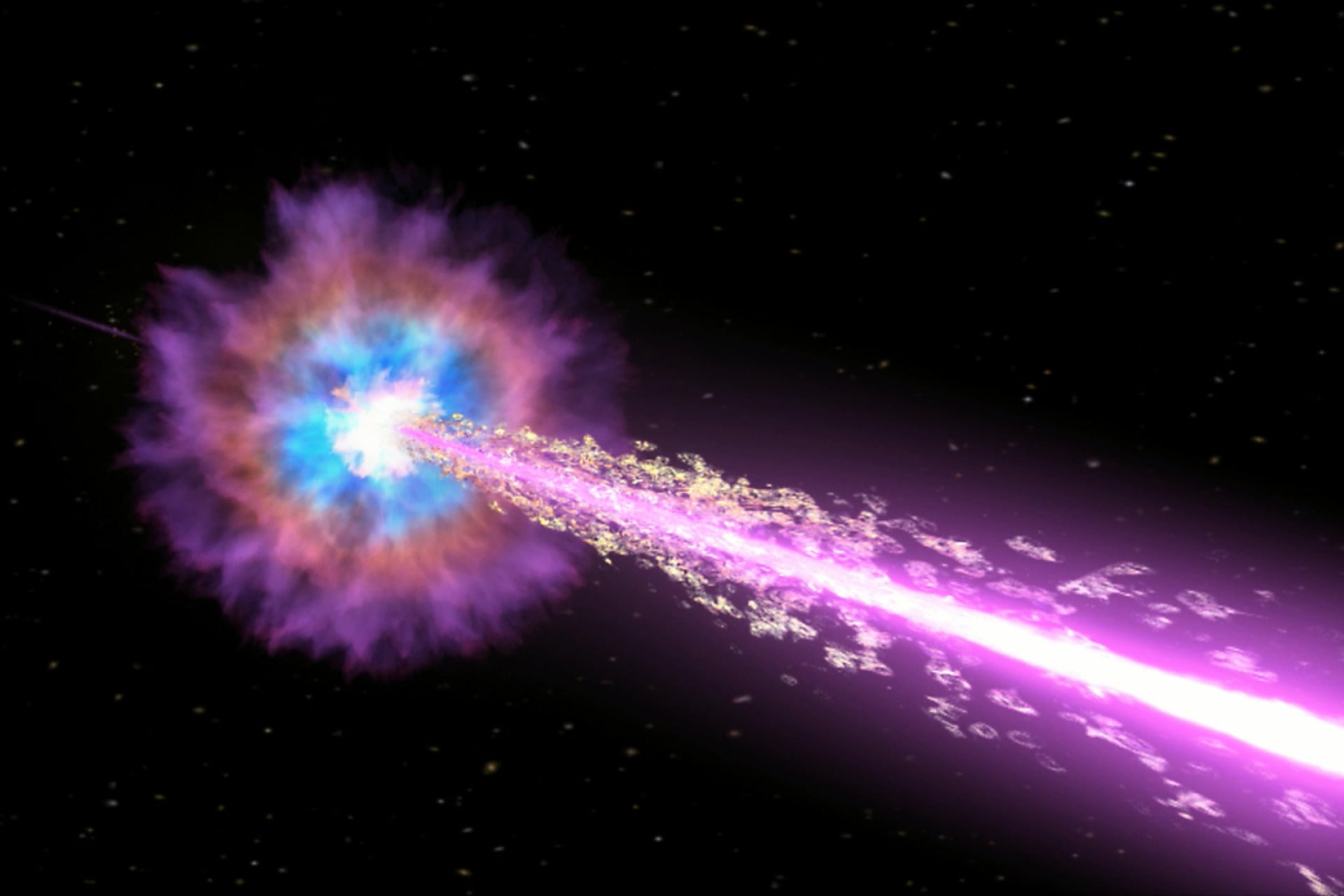
The detection of a photon that seems to have crossed billions of light‑years while retaining its energy has ignited a new discussion among physicists, who argue that the finding could necessitate adjustments to parts of Einstein's relativity.
Captured by a high‑sensitivity telescope array during observations of a far‑off cosmic explosion, the particle’s detection was surprising given the vast distance and the intergalactic medium it traversed; standard models anticipate that photons of this energy would be absorbed or scattered well before they could arrive at Earth.
Within the dominant special‑relativity framework, light’s speed is constant and photons are not expected to undergo changes that let them evade established attenuation mechanisms. This latest observation implies that, in particular circumstances, the photon might have acted contrary to those predictions.
Consequently, a number of theory teams are investigating extensions to the standard model that loosen strict Lorentz invariance or embed quantum‑gravity phenomena. Certain ideas suggest minute breaches of the light‑speed ceiling at ultra‑high energies, whereas others propose new couplings with dark‑matter fields that might maintain the photon’s integrity across cosmic spans.
Einstein’s relativity, devised more than a hundred years ago, has survived innumerable experimental validations, ranging from particle accelerators to GPS satellites. Nevertheless, the theory remains incomplete in merging gravity with quantum mechanics, permitting subtle adjustments that may surface only in extreme astrophysical environments.
The importance of this result goes beyond theoretical conjecture. Should the photon indeed have bypassed the anticipated attenuation, it could alter our comprehension of high‑energy radiation’s journey across the cosmos, affecting models of gamma‑ray bursts, active galactic nuclei, and the cosmic background.
Scientists intend to confirm the observation by hunting for comparable events in archival datasets and by arranging future measurements with next‑generation observatories. Further data will aid in deciding whether the anomaly represents a statistical outlier, an instrumental artifact, or a bona‑fide indication of new physics.
Although the scientific community stays cautious, the episode highlights how uncommon cosmic messengers can contest established notions and extend the frontiers of fundamental physics.



Comments (0)
Be the first to comment.
Join the discussion