Microscopic Stone Points Hint at Arrow‑Like Hunting 80,000 Years Past
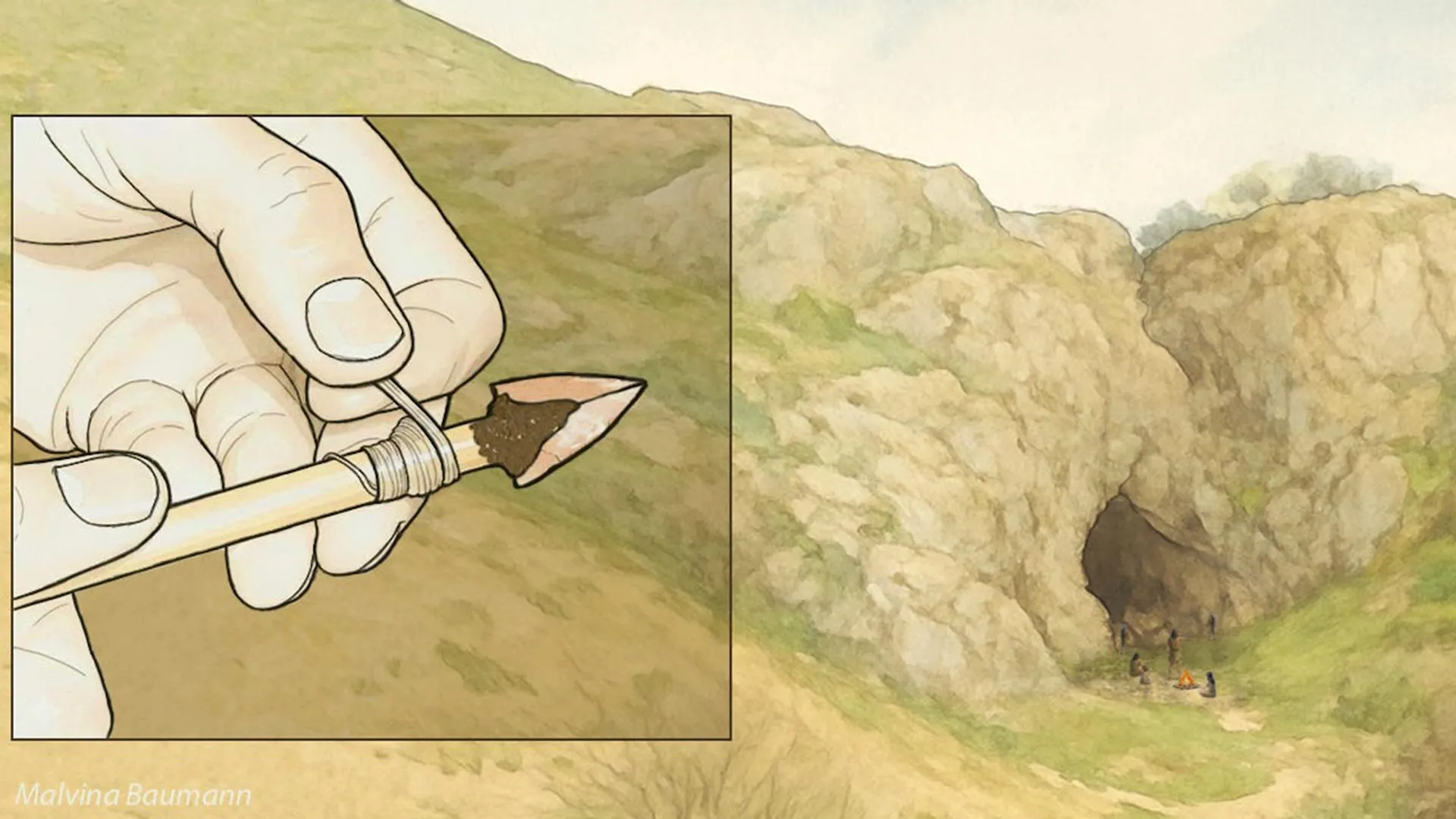
Archaeologists excavating the Kyzylkum Desert in Uzbekistan have uncovered a collection of minute stone projectile points dating to roughly 80,000 years ago, a discovery that could shift the known origin of arrow‑type weaponry further back than previously recorded.
The tiny implements, only a few millimeters wide, were retrieved from a sediment layer that also contained Middle Paleolithic stone tools. Microscopic inspection revealed a symmetrical, leaf‑shaped outline and a delicately retouched edge, characteristics that closely resemble later Upper Paleolithic arrowheads such as those found at the La Madeleine complex in France. Laboratory experiments demonstrated that striking a soft target produced puncture marks consistent with high‑velocity impact, indicating they were meant to be propelled from a shaft.
Scholars have long held that genuine arrows—projectiles launched from a flexible bow—did not emerge until about 20,000 to 30,000 years ago, coinciding with the spread of anatomically modern humans across Europe and Asia. The Uzbek find challenges this view, suggesting that some hominin groups possessed the technical skill to craft and employ aerodynamic points much earlier, perhaps even before Homo sapiens entered the region.
Researchers caution that the points might have been used with a simple spear‑throwing device rather than a fully developed bow, yet the precision of the workmanship and the wear pattern imply a level of intentionality comparable to later arrow technology. If they were indeed components of a bow‑and‑arrow system, this would point to a parallel evolution of hunting tools among separate hominin populations, potentially including Neanderthals or other archaic humans who roamed Central Asia at the time.
The discovery adds to a growing body of evidence that prehistoric peoples were more technologically versatile than traditional models suggest. It also raises questions about how hunting innovations spread across vast distances and cultural groups. Ongoing excavations aim to uncover further contexts—such as hafting residues or associated bow fragments—that could verify how these microscopic implements were employed. Until then, the Uzbek points serve as a provocative reminder that the narrative of human ingenuity continues to be rewritten, one tiny shard at a time.


Comments (0)
Be the first to comment.
Join the discussion