Meta partners Korean startup to construct ultra‑dense AI data center built on CXL
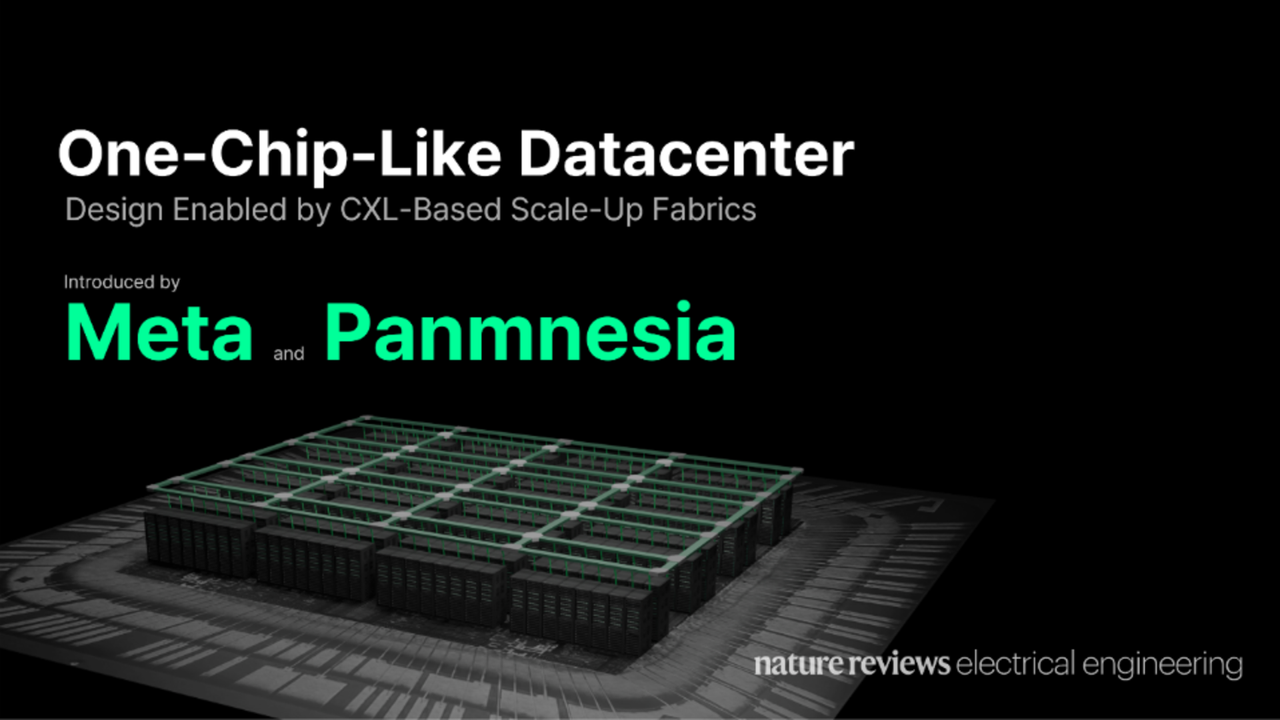
Meta is working with a South Korean hardware company to design an extremely compact data‑center layout capable of housing almost a thousand AI GPUs within one logical domain. The project utilizes the Compute Express Link (CXL) framework that the social‑media giant rolled out last year, intended to simplify the exchange of data among processors, accelerators and memory across numerous server racks.
The Korean firm, Panmnesia, supplies a CXL‑focused interconnect that ties together CPUs, GPUs and memory, enabling as many as sixteen accelerators to be managed by a single CPU. This expands on the prior setup, which only allowed two devices per processor, and offers tighter coordination for massive AI workloads.
By consolidating the hardware into a single domain, Meta aims to cut latency and boost bandwidth for both training and inference operations that drive its recommendation algorithms, content‑moderation systems and upcoming virtual‑reality services. The packed configuration also strives to shrink the physical size of AI clusters, a mounting issue as the firm scales compute power to satisfy growing demand for generative‑AI capabilities.
Observers in the industry point out that this move mirrors a wider trend toward composable infrastructure, where memory and accelerator assets can be dynamically shared. CXL, an open‑standard supported by leading chipmakers, makes such fluid resource distribution possible, and Meta’s early embrace signals faith in its ability to scale for future AI models that will feature ever‑larger parameter counts.
The collaboration with Panmnesia adds to a string of internal initiatives focused on custom silicon and specialized hardware. Although Meta has not released timelines or cost figures, the partnership indicates a strategic push to command a larger portion of the datacenter stack—from chip design through rack‑level integration—thereby lowering dependence on external suppliers.
Analysts say that, if the effort proves successful, the architecture could be deployed across other Meta data centers worldwide, potentially shaping how other technology companies build AI‑centric facilities. The next phase involves prototype trials across several racks, after which Meta will evaluate performance improvements before moving to larger‑scale rollouts.



Comments (0)
Be the first to comment.
Join the discussion