Meta Adds Parental Notifications for Repeated Self‑Harm Searches and AI Interactions on Facebook
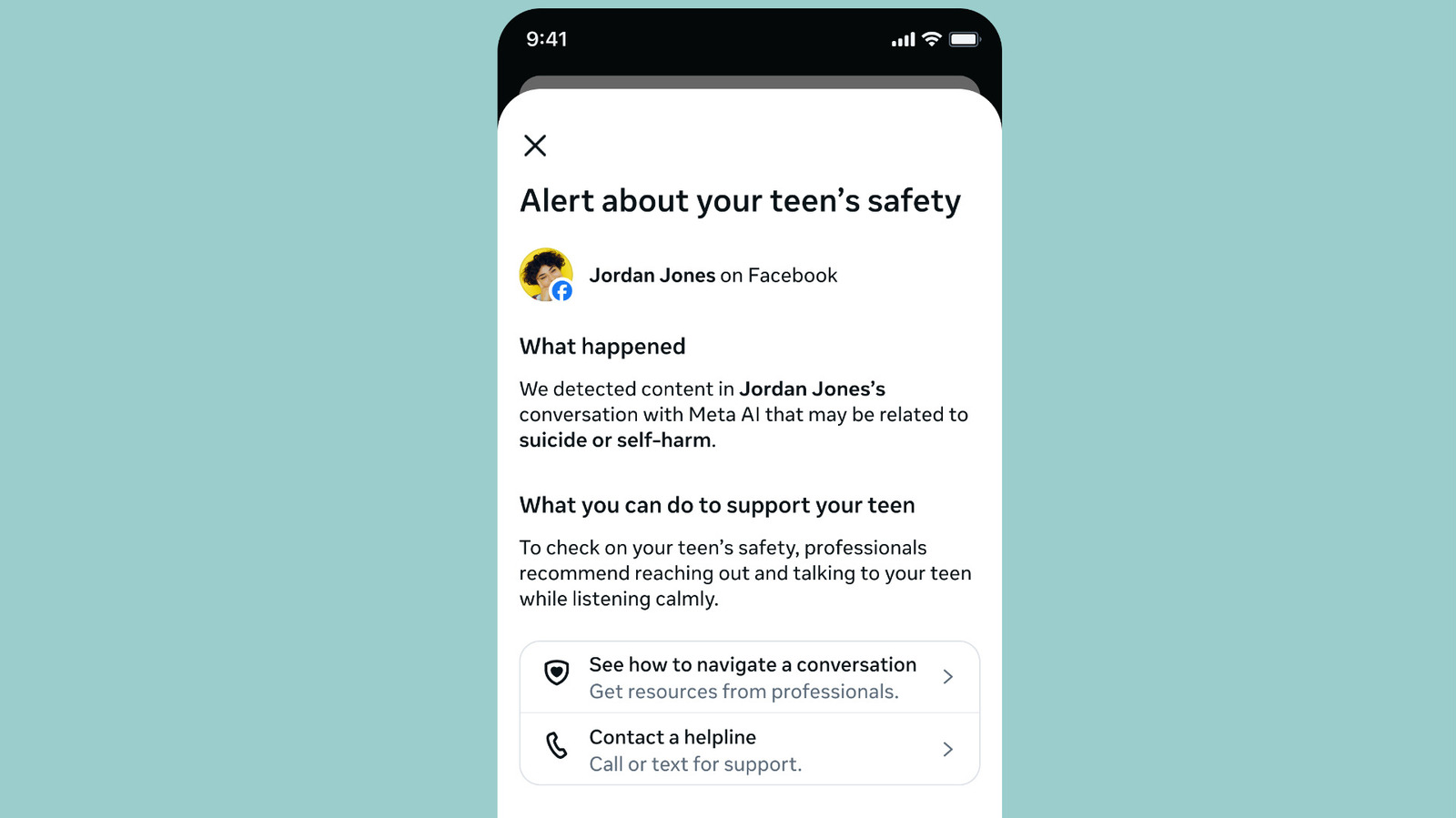
Meta said that Facebook will begin issuing alerts to parents if a teen repeatedly searches for self‑harm content. The capability also covers notifications about any dialogue the youngster has with Meta’s AI tools, including the in‑app chatbot.
The change fits into Meta’s wider push to bolster safety features for its younger audience. With the revised system, the algorithm detects recurring search patterns that indicate a sustained focus on self‑injurious material, rather than a one‑off query. Once the preset threshold is met, a push alert is delivered to the user’s listed parent or guardian, urging them to talk with the teen.
The rollout arrives amid increasing pressure from mental‑health advocates and regulators who contend that social‑media firms should take a more proactive stance against online dangers. Over the past few years, platforms have been condemned for letting damaging material circulate unchecked, especially among adolescents prone to suicidal thoughts and self‑harm. Meta’s alerts are intended to provide families with an early warning, which could facilitate quicker intervention.
Beyond self‑harm tracking, the rule also applies to exchanges with Meta’s AI assistants. Should a teen repeatedly or suspiciously converse with the chatbot—e.g., seeking instructions on self‑harm techniques or voicing anguish—the system will similarly alert a parent. Meta notes the tool is meant to supplement, not supplant, current parental‑control options, and it safeguards privacy by reporting only that an alert was generated, without revealing the exact search terms or chat excerpts.
Analysts point out that while Meta isn’t the first major tech company to embed parental warnings for hazardous activity, the sheer size of its user base gives the move significance. Facebook serves billions of active users globally, including a large teen segment. Using its machine‑learning framework, Meta can spot patterns across massive data sets—a capacity that many smaller services do not possess.
Critics warn that such alerts might raise privacy issues or create tension within families if not approached carefully. They recommend offering parents guidance on how to discuss the matter constructively. Meta has committed to supplying educational materials with the alerts, intended to help families tackle tough subjects without labeling the teen.
Going forward, Meta intends to track how well the alerts work and may tweak the sensitivity levels in response to input from users, mental‑health experts, and regulators. The firm has not announced a worldwide rollout schedule, though the feature is slated for release in jurisdictions that already enforce parental‑consent rules.



Comments (0)
Be the first to comment.
Join the discussion