Japanese Team Develops Transistor That Functions at Over 1,100°F, Enabling Future Venus Missions
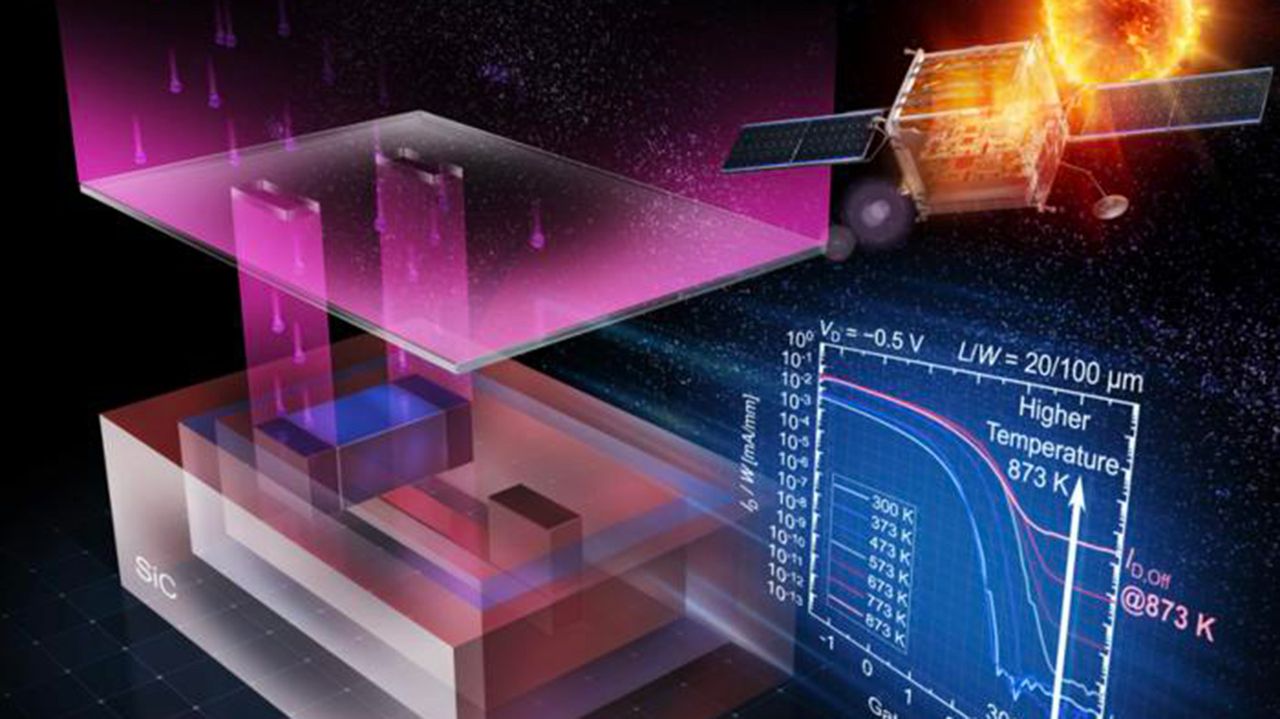
Researchers from a Japanese institute reported a landmark transistor capable of operating dependably at temperatures up to 1,112 °F (600 °C), far surpassing the limits of standard silicon‑based components.
The device underwent a steady ramp from normal room conditions to the extreme 1,112 °F, retaining its usual electrical behavior throughout without any decline. This breadth of temperature tolerance is unheard of for a transistor, which normally loses reliable operation beyond about 250 °C (482 °F) because of material and structural constraints.
The breakthrough results from merging cutting‑edge semiconductor materials with an innovative architecture that eases thermal stresses that typically trigger leakage currents and failure. Although the exact material blend remains confidential, the team highlighted that the transistor’s layout can be incorporated into current circuit designs, avoiding the necessity for wholly new production lines.
A key driver behind the project is Venus’s unforgiving surface, where temperatures linger near 467 °C (872 °F) and pressures surpass 90 atm. Existing probe electronics would either break down or demand massive cooling apparatuses to endure. The transistor’s temperature limit comfortably outstrips Venusian heat, positioning it as a promising component for upcoming lander and atmospheric‑sampling missions.
Aside from space exploration, operating electronics at several hundred degrees Celsius unlocks possibilities for many Earth‑based sectors. Fields like deep‑well drilling, high‑temperature metallurgy, and aerospace propulsion could employ sensors and controllers that no longer require protective casings or cooling loops, which may streamline designs and cut weight.
The investigators intend to advance from single‑transistor experiments to complete integrated circuits, evaluating durability over repeated heating cycles and aggressive chemical settings. Should those assessments prove successful, commercial collaborators could start limited‑run manufacturing in the coming years, transitioning ultra‑high‑temperature electronics from the laboratory to space missions and high‑heat industrial applications.


Comments (0)
Be the first to comment.
Join the discussion