Hubble Snap Reveals Unusual Star Arrangement in the ‘Chandelier’ Globular Cluster NGC 6723
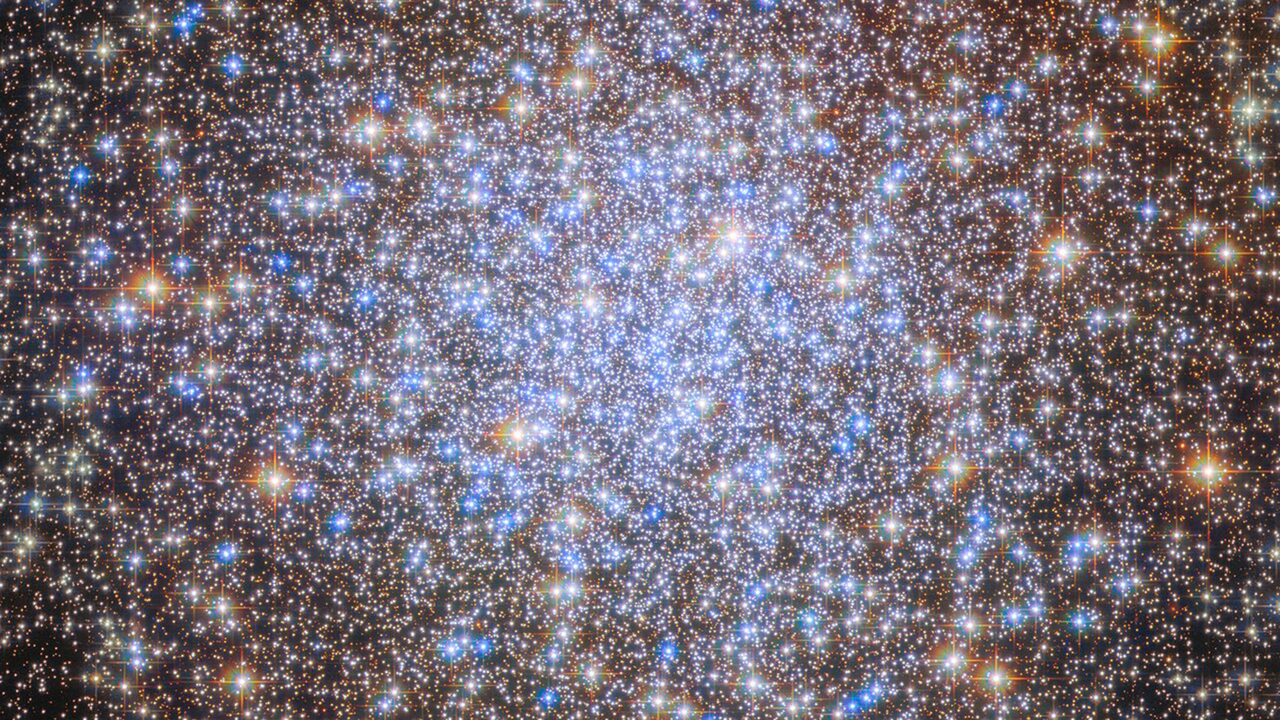
A fresh, high‑resolution image captured by the Hubble Space Telescope showcases an unusual layout of luminous stars within NGC 6723—commonly referred to as the “Chandelier Cluster”—leading researchers to reassess long‑standing ideas about the architecture of these ancient stellar assemblies.
Located about 27,000 light‑years away in the direction of Sagittarius, NGC 6723 is a tightly packed, roughly spherical swarm of ancient stars that circles the Milky Way’s halo, preserving a tangible record of the galaxy’s formative epochs.
Featured as this week’s "Space Photo of the Week," the Hubble picture reveals a dramatic arrangement of bright stars that seem to dangle like decorations from an unseen scaffold. Although globular clusters usually exhibit a smooth, centrally peaked light distribution, the “chandelier”‑like pattern observed in NGC 6723 deviates from conventional models of a relaxed, spherical cluster.
Researchers point out that these anomalies might reflect various mechanisms, from previous gravitational interactions with the Milky Way’s disk to internal dynamical shifts that have altered the cluster’s core. Since globular clusters act as reference points for stellar evolution, any departure from the anticipated structure could shed light on the Milky Way’s merger past or the prolonged dynamical development of compact star assemblies.
This finding is expected to trigger additional observations with both space‑borne telescopes and major ground‑based facilities. In‑depth spectroscopic analysis may determine if the peculiar stars possess distinct chemical signatures or kinematics compared with the surrounding population, and upcoming James Webb Space Telescope imaging could uncover even finer structures within the cluster’s core. At present, the Hubble snapshot introduces a new conundrum to the study of one of the Milky Way’s most ancient members, underscoring that even well‑studied celestial bodies can still yield surprises.


Comments (0)
Be the first to comment.
Join the discussion