Halide Introduces Fold‑Sensitive Shooting Modes in Its First iPhone Duo Release
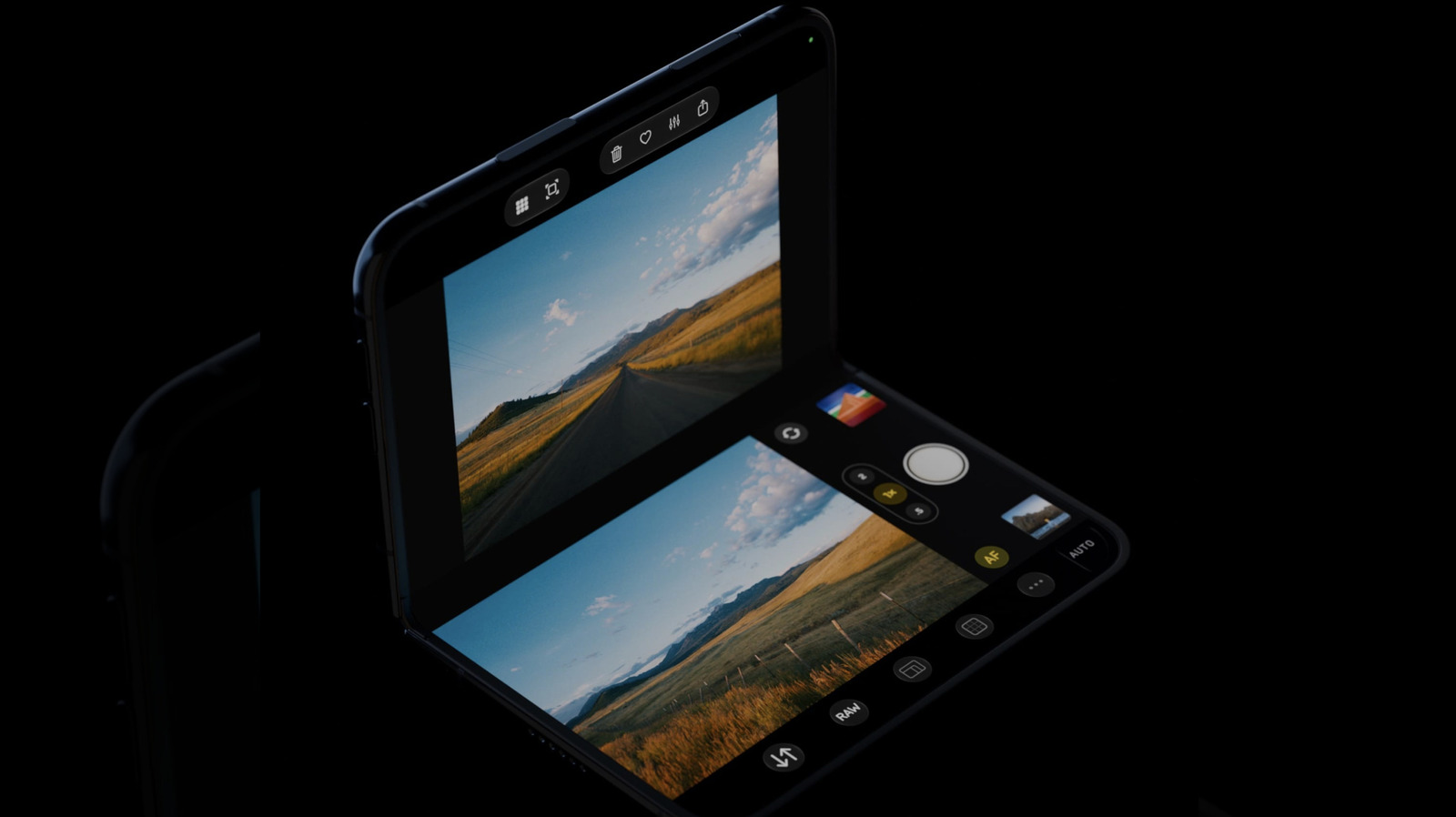
Halide, the photography application, has launched its first update for the iPhone Duo, adding three separate shooting modes that automatically respond to the handset’s present folding state. This feature is intended to simplify the process for users toggling between the device’s compact and expanded configurations, letting the camera adjust on its own.
The iPhone Duo, Apple’s debut foldable phone, can be used in a closed, half‑open, or fully opened posture. Halide’s software recognises each stance and automatically applies a preset—standard, portrait, or landscape—tuning exposure, focus and aspect‑ratio to match the orientation. By embedding this logic inside the app, Halide hopes to eliminate the need for manual setting changes.
Since its 2017 iOS debut, Halide has earned a reputation among enthusiasts for offering professional‑grade manual controls and RAW capture, constantly pushing smartphone photography limits. The company has a history of quickly embracing new hardware features, and the Duo update marks its initial step into software that exploits a device’s physical adaptability.
Analysts observe that foldable phones have struggled to gain foothold partly because software ecosystems have lagged behind the hardware. By delivering context‑aware shooting modes, Halide is filling a gap that could make the Duo more attractive to photographers who value speed and precision. Rivals like Google and Samsung have also rolled out camera tweaks for their foldables, yet few provide automatic mode switching linked to hinge position.
Early adopters who have tried the update note smoother transitions when moving the Duo from a pocket‑size form to a tablet‑like screen. The app automatically expands the field of view and recalculates depth‑of‑field when the screen is fully opened, a boon for landscape shots or group portraits. With the device partially folded, Halide defaults to a portrait‑focused mode that emphasises subject isolation.
Halide’s development team says this rollout is merely the first phase. Upcoming releases aim to fine‑tune the detection algorithm, introduce user‑customisable mode assignments, and possibly support third‑party lenses or accessories. As foldable devices become more prevalent, software that intelligently reacts to hardware changes may become the norm, and Halide appears ready to lead that shift.



Comments (0)
Be the first to comment.
Join the discussion