Deepest Known Underwater Pyroclastic Flow Found in Mariana Trench's Challenger Deep
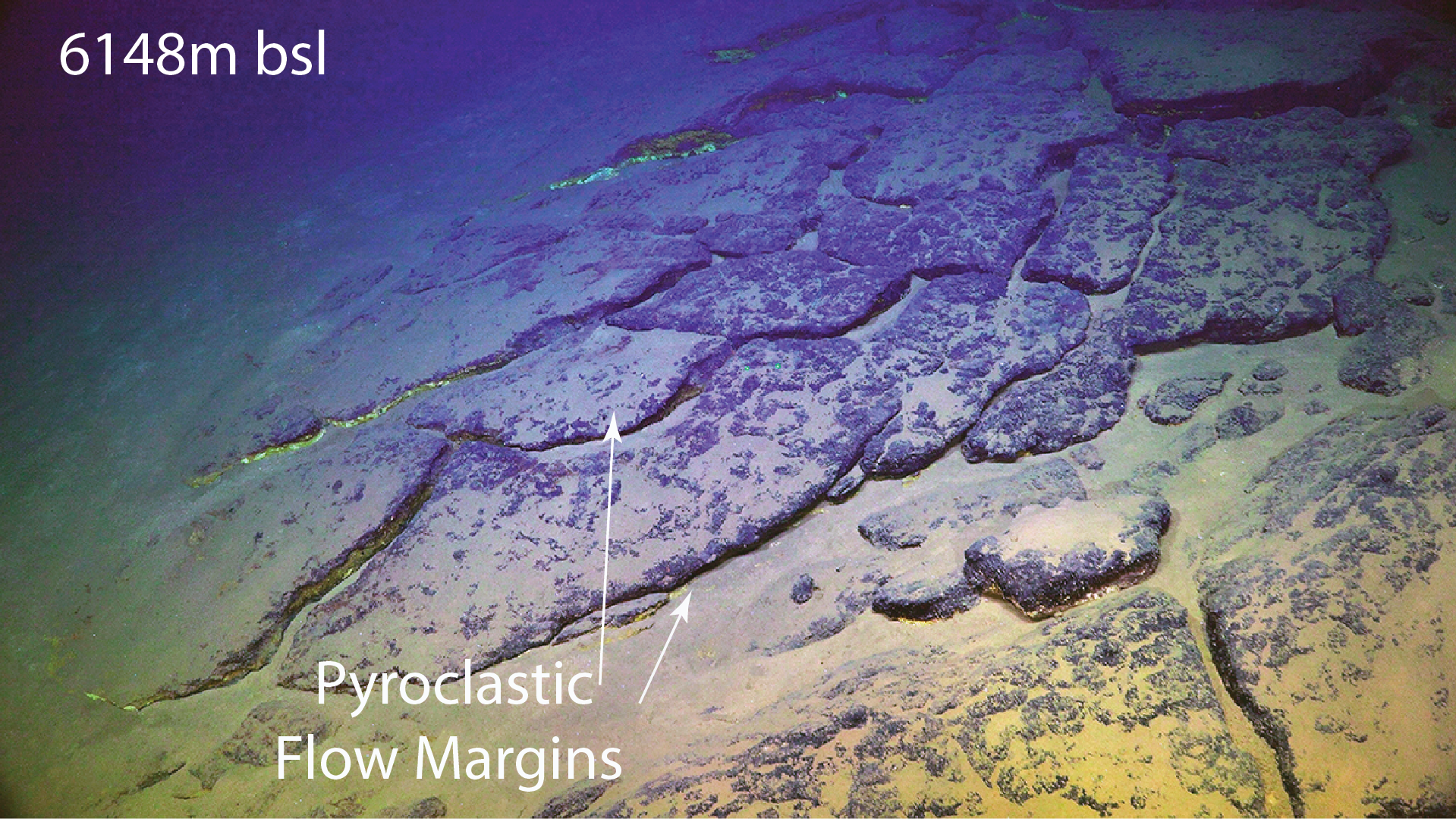
Using a deep‑sea submersible, an international research crew has recorded the planet’s deepest ever pyroclastic volcanic flow, a discovery that upends long‑held beliefs about the locales of Earth’s most violent eruptions. The flow was observed in the Challenger Deep—the Mariana Trench’s nadir—at a depth of more than 10,900 m, marking the inaugural sighting of such a feature under those extreme pressure and light‑starved conditions.
The venture, embedded in a larger program to chart the geology of global oceanic trenches, sent down a manned craft fitted with high‑definition video and multi‑beam sonar. During a sweep of the trench bottom, the operators came across a huge, ash‑rich accumulation spreading from a central vent. Both its shape and makeup corresponded to classic pyroclastic flows—swiftly advancing clouds of hot gas, ash and rock shards—phenomena typically linked to explosive terrestrial eruptions.
Geologists note the find is unexpected, given the Mariana Trench’s distance from established volcanic arcs and the belief that the immense hydrostatic pressure at those depths would inhibit gas‑rich eruptions capable of forming pyroclastic flows. The existence of a vent that expelled sufficient volatiles to pierce the adjacent basaltic crust indicates that melt production and gas buildup can still happen in environments once considered hostile.
Specialists point out that the discovery bears on our grasp of the deep‑sea carbon cycle and seismic hazards. Pyroclastic layers can ferry volcanic gases such as carbon dioxide and sulfur species into the abyss, possibly altering ocean chemistry across geological epochs. Moreover, the abrupt energy discharge within a trench could provoke localized seismic events, a variable that may need to be factored into risk assessments for submersible missions.
The team intends to revisit the site equipped with further instruments to collect direct samples of the flow and to produce a higher‑resolution map of the vicinity. Chemical analysis of the ash and adjacent sediments should enable scientists to infer the eruption’s size and recurrence. The surprise of this finding highlights the value of ongoing exploration of Earth’s most isolated realms, where each fresh observation can overturn prevailing geological theories.


Comments (0)
Be the first to comment.
Join the discussion