ChatGPT Runs on a 1990s SNES Console
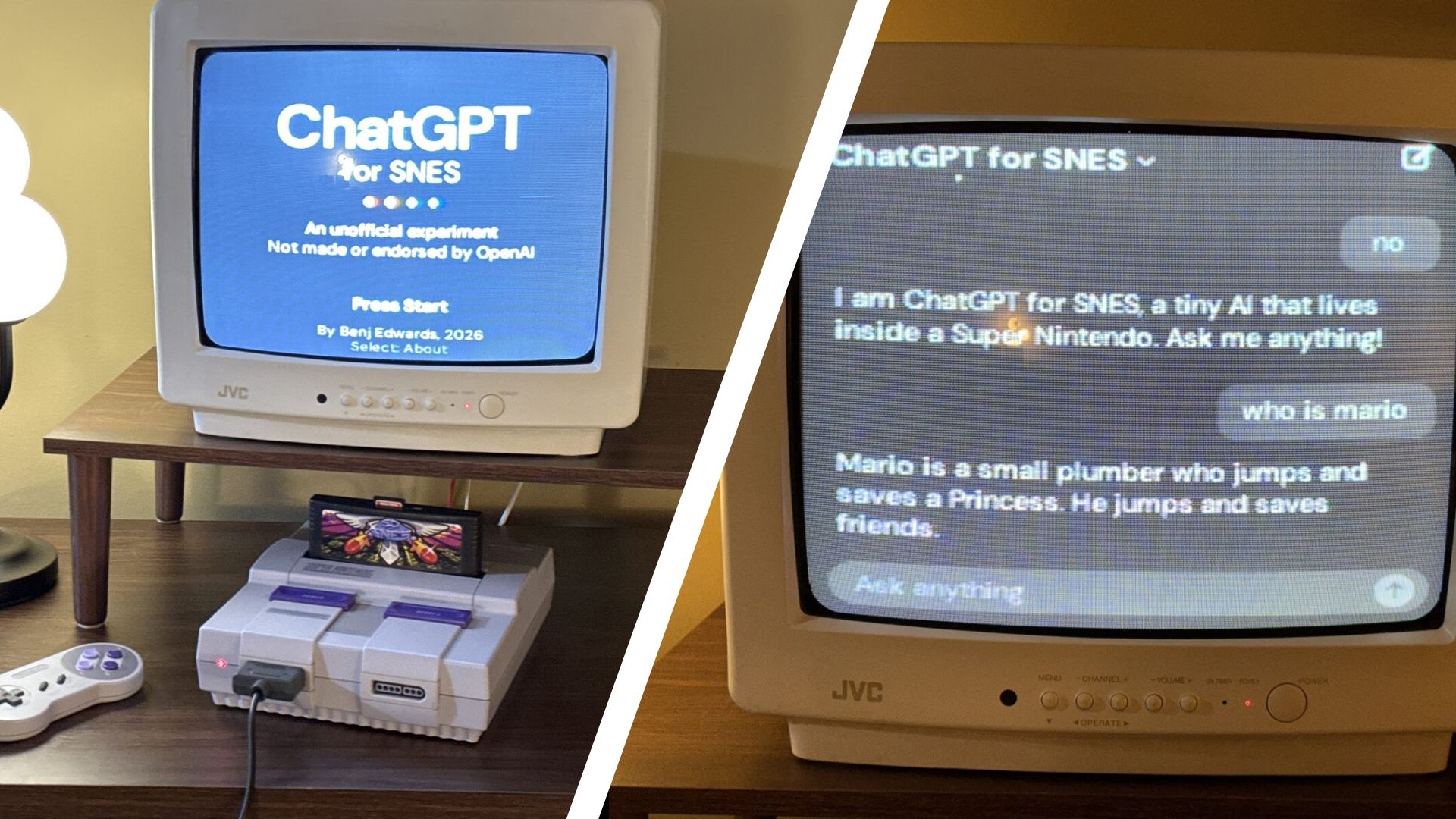
A hobbyist managed to operate a trimmed‑down incarnation of ChatGPT on a vintage Super Nintendo Entertainment System (SNES), representing the inaugural demonstration of the well‑known conversational AI on a 1990s gaming console.
The developer, who prefers to remain anonymous, built the system around a heavily distilled fork of OpenAI's GPT‑OSS‑120B model. By pruning the network to a fraction of its original size, the code can execute on the SNES's Ricoh 5A22 CPU, with additional support from the Super FX 2 coprocessor that was originally designed to accelerate graphics.
The SNES, released in 1990, houses a 16‑bit processor running at roughly 3.58 MHz and only 128 KB of RAM. Those specifications are a stark contrast to the multi‑core, gigahertz CPUs and gigabytes of memory that modern AI models typically demand. To make the model fit, the hobbyist employed aggressive quantization, weight sharing, and layer reduction, trimming the model down to a few hundred kilobytes of parameters.
Model distillation—compressing a large neural network into a much smaller one while preserving its core capabilities—was essential for the project. The resulting chatbot can generate short, context‑aware responses, though its vocabulary and reasoning depth are limited compared to the cloud‑based versions most users know.
The compiled software is released in two variants: a minimal demo that showcases basic interaction, and a more feature‑complete build that includes a small on‑screen keyboard for text entry. Both versions are distributed via open‑source repositories, inviting other retro‑computing fans to experiment, modify, or port the code to related hardware.
Beyond the novelty factor, the achievement highlights how far model compression techniques have progressed. It demonstrates that sophisticated language models can be adapted to run on platforms with orders of magnitude less processing power than typical AI hardware, opening doors for offline, low‑cost AI applications in constrained environments.
Looking ahead, the creator hopes to refine the implementation, potentially adding support for other classic consoles and expanding the model’s conversational abilities. The project also fuels a broader conversation about preserving modern AI capabilities in a form that can survive beyond cloud services, ensuring that future generations can explore AI on the devices that shaped early video‑game history.



Comments (0)
Be the first to comment.
Join the discussion