Bronze Signet Depicting Alexandria’s Lighthouse Recovered from Ocean Floor
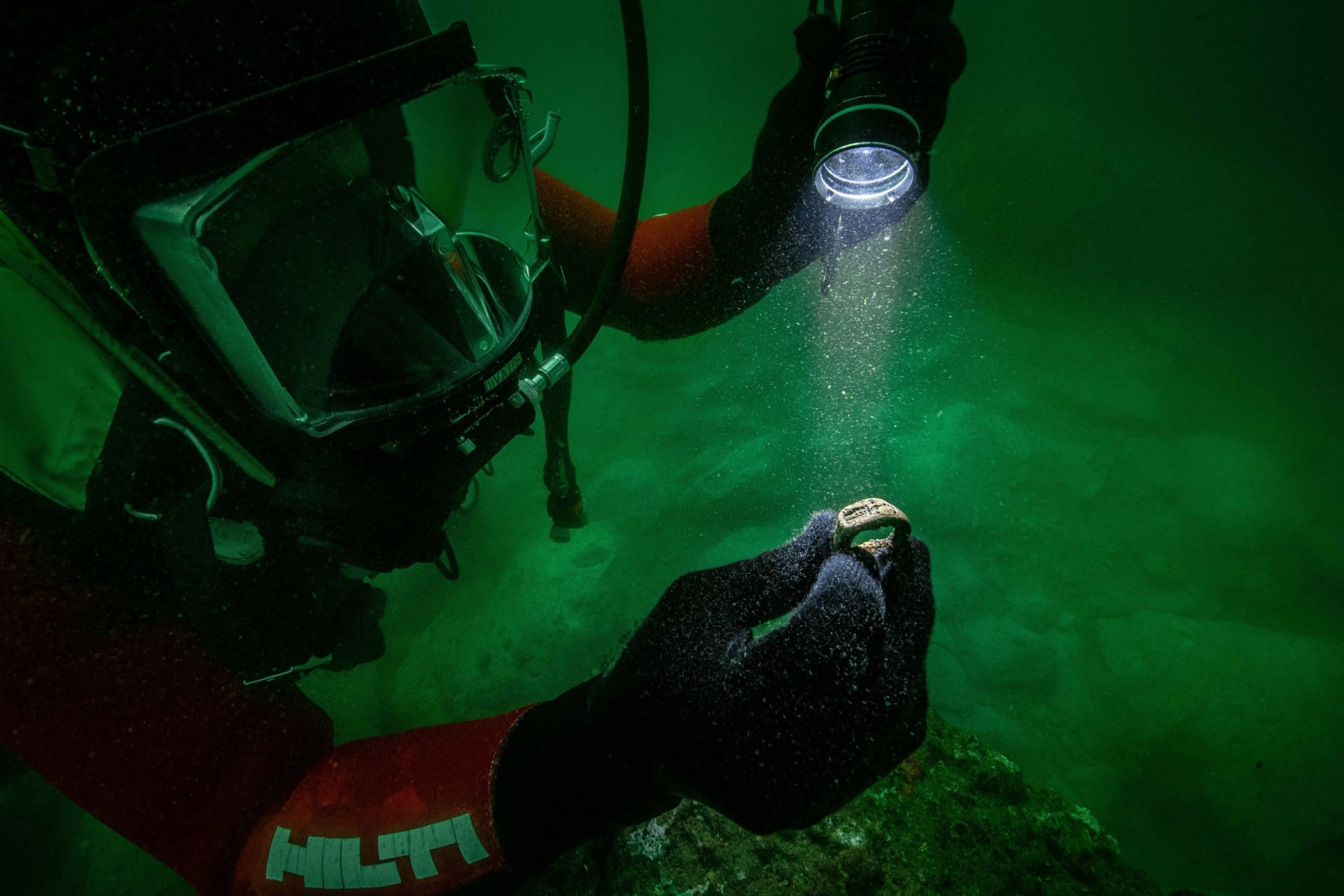
Marine archaeologists have retrieved a unique bronze signet ring engraved with the iconic Lighthouse of Alexandria, representing the inaugural artifact of this type to emerge from the sea floor. The find, disclosed by a group of underwater researchers, provides a scarce physical connection to one of antiquity’s most renowned monuments.
Extracted from a shipwreck off Egypt’s shoreline, the ring displays an intricate relief of the lighthouse—commonly called the Pharos—that once steered vessels into Alexandria’s harbor. Researchers point out that the structure, erected in the third century BCE during the reign of Ptolemy II, counted among the Seven Wonders of the Ancient World and has frequently appeared in artwork and coinage, yet a personal object showing its depiction is without precedent.
Specialists propose that the bronze signet served as a notarizing instrument—a movable seal employed to validate official papers. In ancient times, rings of this sort were impressed into soft wax or clay to leave a distinctive mark, affirming the holder’s authority. The inclusion of the lighthouse design could reflect the owner’s ties to Alexandria’s naval bureaucracy or an intention to align themselves with the emblematic strength of the beacon.
This discovery highlights the expanding role of underwater archaeology in retrieving objects buried by shipwrecks, shoreline erosion, and changing sea levels. The investigators used sonar surveys and remotely operated vehicles to pinpoint the debris zone, then delicately extracted the ring. Conservators are presently treating the bronze, which exhibits corrosion yet retains sufficient clarity for thorough examination.
Although the ring’s precise origin is still unclear, its design corresponds with Hellenistic metalworking, and its bronze alloy matches those documented in the Mediterranean from the 3rd to the 1st centuries BCE. Scholars anticipate that additional studies—such as metallurgical assays and comparative iconographic work—will tighten its dating and perhaps link it to a particular administrative department in Alexandria.
The find has attracted the attention of scholars of ancient administration, who view the signet as a concrete illustration of how record‑keeping and power were exercised in a thriving harbor metropolis. The lighthouse, traditionally examined via written accounts and archaeological fragments, now acquires a personal aspect via an item that might once have belonged to a clerk, trader, or official traversing those same seas.
Upcoming efforts will aim to release the results in a peer‑reviewed journal, carry out an exhaustive survey of the adjacent wreckage, and investigate whether additional similarly inscribed artifacts lie beneath the water. As the signet continues to be studied, it is poised to enrich our knowledge of the routine instruments that underpinned the governance of one of antiquity’s most prominent cities.



Comments (0)
Be the first to comment.
Join the discussion