Bolt Graphics Completes First Live Power‑On of Zeus Simulation GPU
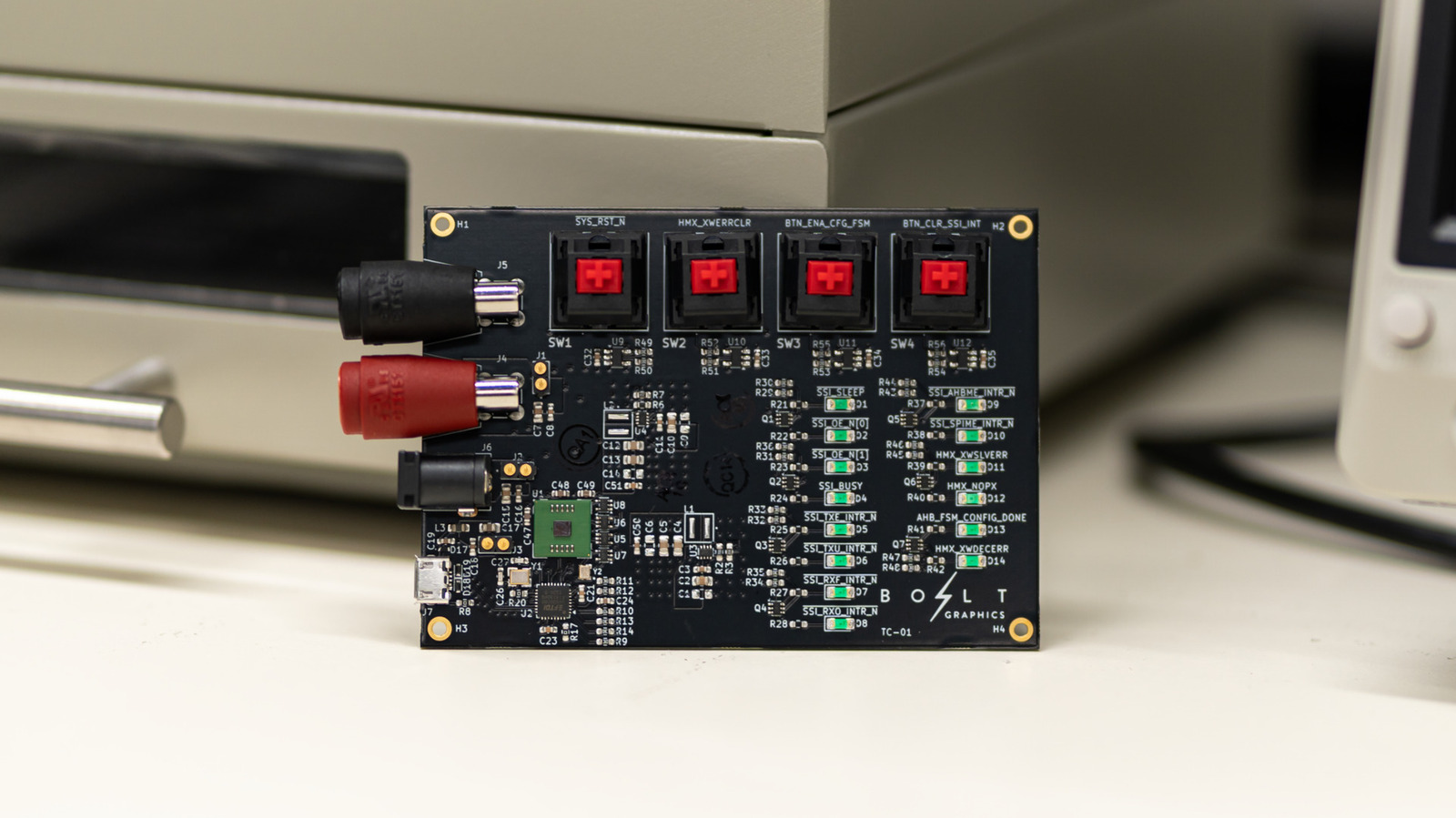
Bolt Graphics reported that its highly anticipated Zeus graphics processor was powered up for the first time, representing a key milestone in the firm’s push to provide a GPU tailored for high‑fidelity simulation tasks.
The company calls the Zeus chip “simulation‑centric,” a product of several years of development. While typical graphics processors split their focus between gaming and compute workloads, Zeus is built to speed up intricate physics, fluid dynamics and AI‑driven modeling—domains that require extensive parallelism and deterministic results.
In a short statement, Bolt Graphics noted that the trial verified the chip’s fundamental operation and showed that its custom silicon can meet the power and thermal limits needed for continuous simulation tasks. While no performance figures were released, the successful power‑up indicates that core components—such as the proprietary memory hierarchy and scheduler—are functioning as designed.
This milestone comes as the market for niche accelerators continues to grow. Firms in automotive, aerospace and scientific research are seeking hardware capable of real‑time simulation for autonomous driving, virtual prototyping and climate modeling. By marketing Zeus as a purpose‑built alternative to a general‑purpose GPU, Bolt aims to secure a niche in these lucrative sectors.
Analysts point out that taking a GPU from concept to silicon is expensive and technically challenging, typically dominated by a few major players. Bolt’s advancement shows that smaller companies can still innovate by targeting specific, high‑impact applications. Observers will monitor how swiftly the firm can progress from this power‑on success to wider validation, driver support and integration with leading simulation frameworks.
Looking forward, Bolt Graphics said additional tests will put Zeus through realistic workloads, and a development kit is slated for release later this year. Should those evaluations verify the chip’s advertised capabilities, the firm could start courting early adopters in fields that require precise, high‑throughput simulation. For the moment, the successful boot‑up provides concrete evidence that the Zeus project is advancing from the lab toward commercial readiness.


Comments (0)
Be the first to comment.
Join the discussion