Boeing Wins $12.68 Million to Equip MQ‑25 Stingray with Electronic‑Warfare Gear
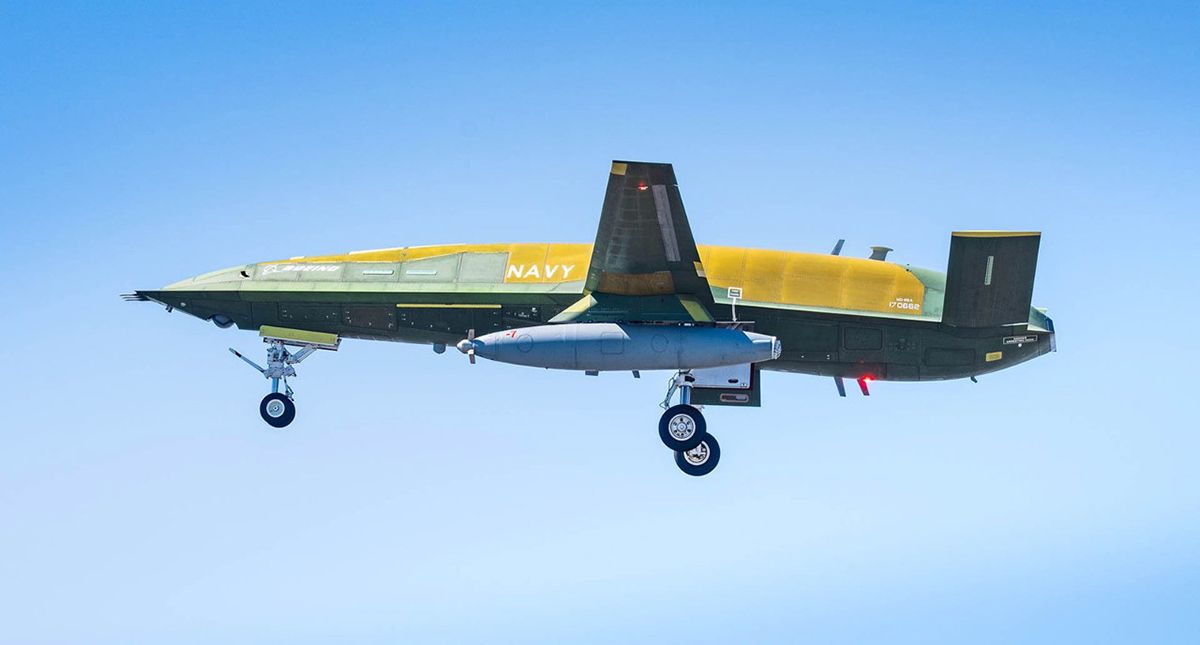
Boeing disclosed that it has obtained a $12.68 million contract to outfit its MQ‑25 Stingray UAV with sophisticated electronic‑warfare (EW) systems, broadening the aircraft’s initial refueling mission into a wider combat‑support role.
The money will finance enhancements to the platform’s radio‑frequency (RF) blanker, encrypted data storage, and mission‑computer security, with the work scheduled to continue until November 2029. Once completed, the MQ‑25 should be capable of jamming enemy radars, safeguarding allied communications, and performing additional electronic‑attack tasks, all while maintaining its aerial‑refueling function.
According to the Navy’s April 2026 acquisition report, aerial refueling remains the Stingray’s chief mission, underscoring its design as the service’s inaugural carrier‑based unmanned refueler. Yet the new funding indicates a strategic shift toward adding EW capabilities, bringing the MQ‑25 in line with the Navy’s wider effort to deploy multi‑role unmanned assets capable of operating in contested zones.
Created as part of the U.S. Navy’s Unmanned Carrier Aviation (UCA) program, the MQ‑25’s development has been uneven, marked by cost overruns and timeline slips. Incorporating electronic‑warfare functions allows Boeing to boost the aircraft’s operational worth and support ongoing funding in a climate of competing defense demands.
The modernization effort targets three principal components: a stronger RF blanker to curb hostile radar signals, hardened and encrypted onboard storage for safeguarding mission‑critical information, and a reinforced mission‑computer architecture designed to thwart cyber attacks. Combined, these upgrades should permit the Stingray to function alongside carrier strike groups, delivering fuel and electronic shielding to manned platforms.
Analysts observe that, although the sum is modest relative to the program’s total budget, it could act as a proof‑of‑concept for subsequent unmanned EW systems. Should the effort prove effective, the Navy might look to procure more MQ‑25s or comparable drones fitted with electronic‑attack packages, potentially diminishing reliance on distinct, dedicated EW aircraft.
Going forward, Boeing plans to collaborate closely with the Navy’s Naval Air Systems Command (NAVAIR) to install the upgrades, carry out flight tests, and certify the altered systems. The schedule runs through late 2029, after which the Navy will evaluate the platform’s performance and determine whether to broaden the EW mission or return to a primarily refueling emphasis.
This development highlights a wider pattern in U.S. defense acquisition: repurposing existing airframes to meet new threats while avoiding the expense of wholly new designs. By adapting the MQ‑25, the Navy aims to strengthen its electronic‑warfare capabilities while retaining the strategic benefit of a carrier‑based unmanned refueler.



Comments (0)
Be the first to comment.
Join the discussion