Apple’s Mac Studio Evolves: Design Adjustments and Performance Gains Across Three Iterations
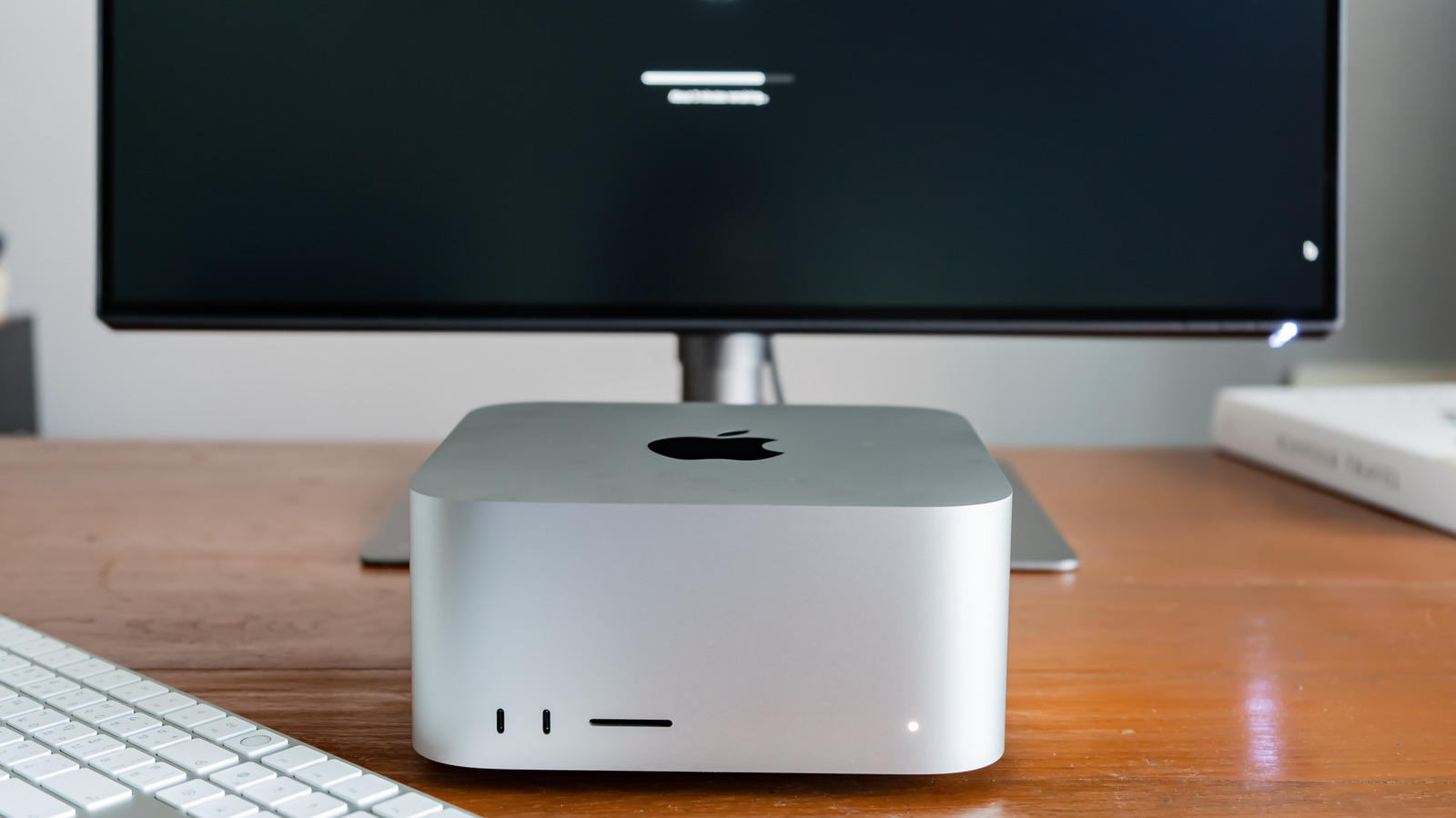
Apple’s Mac Studio has progressed from a specialized, high‑performance desktop to a staple in numerous professional pipelines, each revision delivering significant internal improvements alongside subtle external tweaks.
When it launched in early 2022, the first‑generation Mac Studio housed Apple’s inaugural M1 Max and, at the high end, the M1 Ultra—a pairing of two M1 Max dies that delivered desktop‑level power within a 7.7‑inch square frame. The chassis was intentionally understated, with a matte‑finished aluminum shell, a lone front‑mounted power button, and a plentiful port selection: four Thunderbolt 4 connectors, two USB‑A ports, an HDMI outlet, and a 10‑Gb Ethernet jack.
A year later, Apple rolled out the second‑generation version equipped with the M2 Ultra chip. Although its outer shape stayed virtually the same, the upgraded silicon produced a clear boost in CPU and GPU performance, driven by more cores and greater memory bandwidth. Benchmark data from Apple and third‑party testers recorded as much as a 30 percent gain in rendering workloads and more fluid processing of massive video files, cementing the Mac Studio’s attractiveness to creators seeking relentless power without a tower’s heft.
In addition to performance, the 2023 update introduced modest design changes. The back panel’s ports were reorganized, moving the power input nearer to the left side, which eases cable routing in tight workstations. Apple also upgraded the cooling architecture, adding a more extensive heat‑pipe layout that suppresses fan noise even during extended heavy use. Internally, the refreshed units can accommodate up to 128 GB of unified memory, doubling the 64 GB limit of the M1 Ultra and enabling heavier, data‑rich applications to operate without hiccups.
The significance of these revisions lies in the Mac Studio’s distinctive position between Apple’s consumer‑oriented desktops and the premium, modular Mac Pro. Its compact size paired with workstation‑level capability offers a compelling option for freelancers, boutique studios, and even sizable firms aiming to adopt Apple silicon while retaining some expandability. The increased memory ceiling and enhanced thermal solution also lengthen the machine’s viable lifespan, postponing expensive replacement cycles.
Analysts observe that Apple’s step‑by‑step method—preserving the same chassis while inserting stronger processors—echoes the tactics used for the iMac and MacBook families. Such steadiness allows developers to fine‑tune software for a reliable hardware envelope, and users enjoy consistent accessory compatibility. Simultaneously, the minor design revisions reflect Apple’s responsiveness to practical user feedback, notably on port positioning and noise levels.
Future speculation revolves around a potential next‑gen Mac Studio based on the forthcoming M3 architecture, which could bring even more cores and expanded memory options. There are also whispers of a modular interior design that would let owners swap parts like storage or GPUs without discarding the whole chassis. Until Apple confirms anything, the existing Mac Studio range exemplifies the company’s skill at polishing a product via targeted hardware upgrades while preserving its visual essence.
For professionals comparing desktop solutions, the Mac Studio’s progression highlights a wider industry movement: merging a small footprint with workstation‑class power, propelled by the swift evolution of Apple’s bespoke silicon.



Comments (0)
Be the first to comment.
Join the discussion